The short answer: yes, with conditions.
You can bring small, reasonable quantities of medicine for personal use into China. The extra checks concern narcotic and psychotropic medicines. Before packing, check what is in your medicine, how much you need and which documents to bring. Official personal-medicine guidance
Mainland China · Sources checked October 19, 2026 · Travel preparation, not individual medical or customs clearance advice.
Start with your situation
Start with what you are packing:
- Everyday pills — pain relief, allergy tablets and cold remedies
- Daily prescriptions — paperwork, packaging and quantities
- ADHD, sleep or anxiety medication — check controlled ingredients
- EpiPens, liquids and refrigerated medicine — entry and flight checks
Just need to get organized? Skip to the packing checklist. If you need to ask Customs about a particular medicine, there is a message you can copy below.
Everyday pills and allergy medicine
Packing ibuprofen, paracetamol or an allergy tablet? Read the active ingredients before looking up the brand. A plain painkiller and a “cold and flu” version from the same company can contain different substances.
For medicines without narcotic or psychotropic ingredients, Shanghai Customs applies the general personal-use, reasonable-quantity rule. Its guidance does not list every brand, so the ingredient list is your starting point.
Keep the box or labelled bottle. If the ingredients mean nothing to you, ask your pharmacist to help you read them, then check any unclear China restrictions with the relevant authority. Even something sold over the counter at home can have different rules abroad. UK travel guidance
Packing antihistamines for a food allergy? Follow your clinician's allergy plan, and save a Chinese explanation of your allergy on your phone for restaurant visits.
Daily prescriptions and how much to bring
How many days' worth can you bring? The general guidance does not give one number for every medicine. It says “reasonable personal use”; controlled medicines have more specific limits. A blanket “90 days is fine” would be an easy answer, but it is not one these rules support.
When you ask about quantities, give actual numbers: “I take one tablet a day, will be in China for 21 days and plan to carry 28 tablets.” That gives the person answering something concrete to check. If you need several months of treatment, confirm the amount before departure, even if you already have a prescription for it.
| What to prepare | What it explains | Status |
|---|---|---|
| Original labelled packaging | Product, strength and ingredients | Practical packing recommendation; also advised by US travel guidance |
| Your prescription | Who the medicine is for and how it is prescribed | Supporting evidence; extra requirements depend on the medicine |
| A medical diagnosis certificate and ID | Medical need and identity | Required by Article 44 for the narcotic / Category I situation described below |
| Quantity and travel dates | Why you are carrying that amount | Useful for a specific pre-travel inquiry |
| Any official response | Which product and circumstances were discussed | Keep it available; it does not replace inspection |
Keep the paperwork together and save a copy you can open without internet. For a longer stay, discuss refills with your prescriber before leaving: the exact product you use may not be available in China. UK medication advice
Do I need a doctor's letter to bring medicine to China?
For narcotic and Category I psychotropic medicines, the diagnosis certificate and ID requirement above matters. The general guidance linked here does not state a blanket doctor's-letter requirement for all medicines. For controlled medicines or injections, though, CDC travel guidance recommends asking your prescriber for a note.
If you need one, give the clinic a clear request. Ask it to include:
- Your name and the condition being treated.
- Each medicine's generic name, strength, dose and how you take it.
- Any necessary equipment, such as needles or injection devices.
- The clinician's contact details, on the clinic's letterhead.
These are useful details for a travel letter, drawn from CDC's preparation advice. Confirm the document requirements for your particular medicine with Customs. The letter should come from your clinician; the message template further down this page is just for asking questions.
ADHD, sleep and anxiety medication
This is the section to sort out before you fly. “ADHD medication” or “sleeping tablets” is too broad for a useful customs answer. Find the exact active ingredient on your prescription or packaging, then check its current Chinese classification.
For narcotic drugs and Category I psychotropic substances needed for treatment, Article 44 specifies a medical diagnosis certificate, personal identification and an amount within the maximum permitted for a single prescription. Customs also applies personal-use and reasonable-quantity principles. Ask how that prescription limit applies to your supply; a foreign prescription alone does not settle the quantity question. Article 44
For Category II psychotropic substances, Shanghai Customs advises bringing supporting medical documents and proactively declaring. It allows prescribed quantities to be extended where appropriate, so confirm the amount you intend to carry. Official guidance, updated October 14, 2026
If you are looking up Adderall, Vyvanse, Ritalin or Concerta, be careful with advice about someone else's prescription. These products are not interchangeable. The Shanghai FAQ specifically discusses methylphenidate in Concerta as Category I; that answer does not cover every ADHD medicine. Ask about your exact ingredient, form and quantity. Any change to your treatment belongs in a conversation with your clinician.
Where can I check China's controlled medicine lists?
The Shanghai Customs FAQ links to two downloadable catalogues at the bottom of the page: Narcotic Drugs for Medical Use and Psychotropic Drugs for Medical Use. Start with the generic ingredient on your prescription, rather than searching only for the brand on the box.
If you cannot match the name, include a photo of the ingredient label when you contact the relevant authority. Ask them to confirm the classification and current requirements. A failed search in a document is not clearance to travel with it.
EpiPens, liquids and refrigerated medicine
With an EpiPen, insulin pen or another injectable, there are two things to check: whether your medicine meets China's entry requirements, and how to carry the device, needles and any cooling equipment through the flight.
For an emergency allergy injector, keep the label and prescription or clinician's documentation with it. Ask the airline how to keep it accessible during the journey, and follow your clinician's emergency plan. US travel guidance also recommends carrying prescription medicines in their original packaging with the prescription.
Under CAAC guidance, necessary liquid medicine for use during the journey can be carried after security confirmation. Check the rules at your departure airport and connections too, including any domestic flight in China.
For refrigerated medicines, plan the whole journey, including transfers and time at the hotel. Follow the manufacturer's temperature limits and ask your pharmacist and airline about a suitable setup. A hotel fridge is only useful if it can keep your medicine at the required temperature without freezing it. If you are also planning meals around an allergy, see our peanut allergy guide.
Should medicine go in hand luggage or checked baggage?
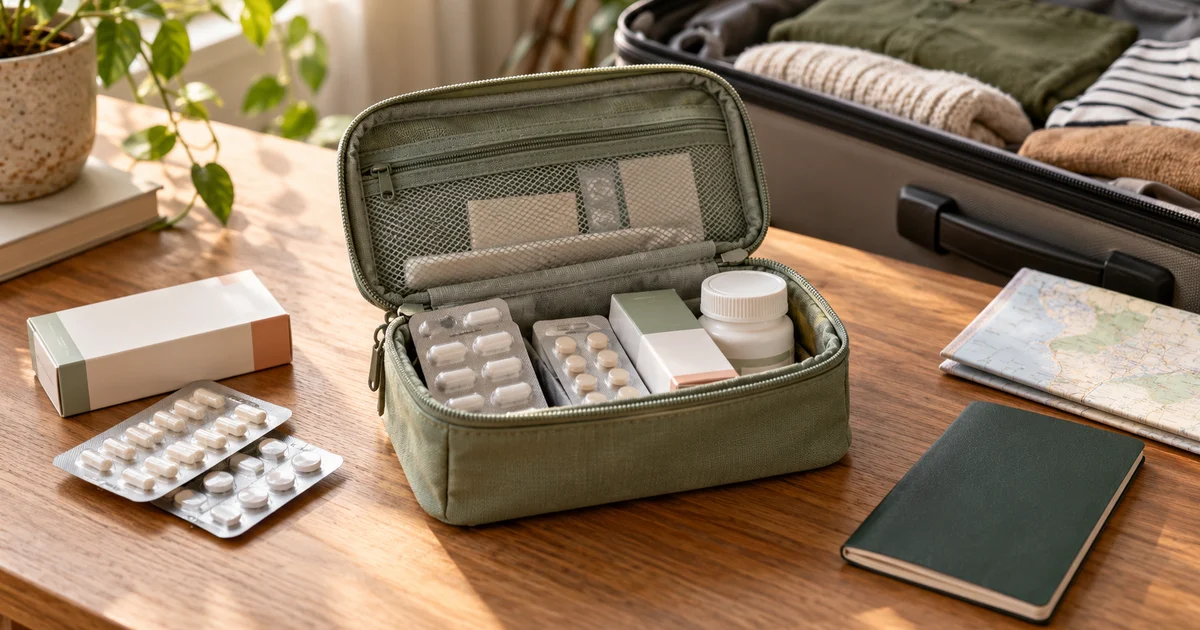
Keep your medicines in your carry-on, in their original labelled containers. That is CDC's packing advice, so a delayed suitcase does not leave you without your treatment. Keep the prescription and any required medical documents in the same accessible pouch.
If cabin crew need to put your bag in the hold at the gate, take the medicine pouch out first. For liquids, needles and cooling packs, arrange the security and airline requirements in advance. Putting a medicine in checked baggage does not change China's entry rules.
Your before-you-fly checklist
Before you close the suitcase, check these four things:
- Identify it. Record every active ingredient, strength and formulation—not only the brand.
- Check the amount. Write down total quantity, prescribed use and the full itinerary; confirm unusual or controlled supplies in advance.
- Keep it identifiable. Retain labelled packaging and gather the prescription, diagnosis certificate or other documents relevant to your case.
- Plan the journey. Confirm liquid, needle and cooling arrangements; keep documents accessible and save official replies offline.
Still have a question?
Tell us which part is unclear and leave your email so we can reply.
For permission to bring a medicine in, contact Customs using the details below. Please keep prescriptions, medical records and passport details out of this feedback form.
Ask about your exact medicine
Save yourself a round of back-and-forth: include the medicine's ingredients, the amount and your travel dates in the first message. You can copy the template below for the relevant customs office. If you cannot find the right contact, ask your nearest Chinese embassy or consulate which office handles the question.
Shanghai's official FAQ lists 021-12360 for customs inquiries. If you are calling from overseas, check how to reach the service from your country. For a different arrival port, look up that port's customs contact. Official contact reference
Subject: Personal medication for travel to mainland China

I will enter China at [airport / port] on [date]
and leave on [date]. My onward itinerary is [details].

Medicine: [brand and every active ingredient]
Strength and form: [for example, mg per tablet]
Prescribed daily use: [amount]
Total quantity carried: [tablets / devices / mL]
Documents available: [prescription / diagnosis certificate]

Could you confirm the applicable classification, quantity
limit, required documents and declaration procedure?
Is a translation or any advance authorization required?
If another office handles this, please direct me to it.
Replace the brackets before sending it to the relevant authority. Keep the reply with your travel paperwork; you will still need any medical documents or declaration it asks for.
What to do at arrival
If you need to declare your medicine, use the red channel. The 2025 declaration announcement allows paper or electronic declarations. Even if you have submitted one electronically, you still need to go through the red channel for customs confirmation.
Unsure which channel to take? Order No. 276 directs you to red as well. Have the medicine's labels and your paperwork ready so you can explain what you are carrying. Customs will decide whether it can enter.
A few practical questions
Can I use a weekly pill organizer?
Keep the original labelled packaging with you, even if you use an organizer for daily doses. Loose tablets in a Monday-to-Sunday box are much harder to identify. This is a packing recommendation; the general guidance does not establish a blanket ban on organizers.
Does my prescription need a Chinese translation?
The official sources linked here do not give a single translation or notarization requirement for all medicines. Ask about your particular documents when you contact Customs. A translation may make them easier to read, but check whether a specific format is required before paying for one.
What if China is only a stopover?
Include your whole itinerary when you ask. Will you stay airside, collect luggage or enter China? A two-day stop with six months of medicine for an onward trip needs a more specific answer than “personal use.” Order No. 276 addresses transit separately, and you will need to check the other destinations too. Transit provisions
Can I mail more medicine later?
Check postal or courier rules separately before arranging a refill by mail, especially for controlled medicines. The rules for medicine in your suitcase do not automatically cover a parcel. Sort this out before you leave if your treatment depends on another supply arriving.
What if I lose my medicine or run out in China?
Contact your travel insurer's assistance service and ask about a local clinic. Have your prescription, ingredient names and doses ready: the same brand or formulation may not be available. CDC's medication guidance recommends bringing the original label and prescription when seeking a replacement; let a local clinician or pharmacist assess the options.
For an urgent medical emergency, call 120 for an ambulance. The UK's China health page also links to medical facilities where some staff speak English. Save a suitable contact before your trip if you depend on a regular medicine.
Official sources
Last checked October 19, 2026. For the wording behind the advice above:
- Shanghai government: personal medicines and customs contact.
- Shanghai Customs: narcotic and psychotropic medicines, updated October 14, 2026.
- Regulations on Narcotic Drugs and Psychotropic Drugs, Article 44.
- GACC Order No. 276 and 2025 luggage declaration procedures.
- CAAC: liquids and necessary medication during air travel.
- US travel guidance: packaging and prescriptions; UK guidance: treatment continuity and local availability.
- CDC: packing medicine, preparing a clinician's letter and traveling with restricted medicines. These are general travel recommendations; the China-specific rules are linked above.
Packing snacks as well? Check those separately in our guide to bringing food into China.