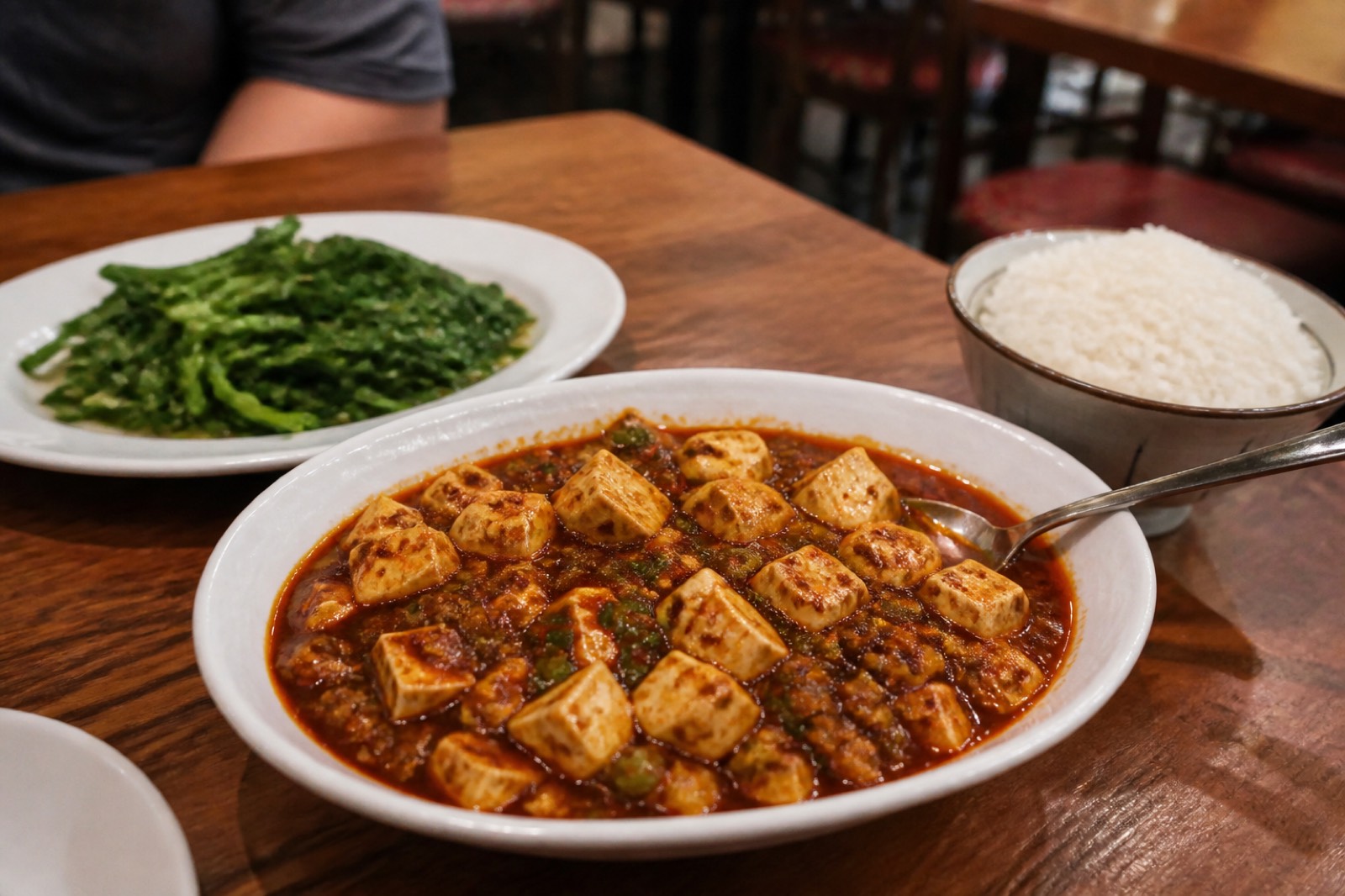
Food allergies do not disappear at the border. If anything, they become harder to manage because Chinese cooking relies heavily on sauces, mixed oils, fermented ingredients, and shared kitchen tools. A dish that looks simple on the menu may contain several allergen sources at once.
The good news is that many restaurants are used to customization, especially in tourist cities. The challenge is communication. You need to know which allergens appear often, where they hide, and how to ask clearly before the food reaches your table.
Why allergies are harder to spot in Chinese restaurants
Western menus often list major allergens by law. In China, ingredient disclosure on menus is much less standardized. Sauces are frequently pre-made, and staff may know the flavor profile better than the full ingredient label.
That creates three common problems for travelers:
- A dish name may not mention the allergen at all.
- The allergen may be in oil, paste, stock, or garnish rather than the main ingredient.
- Cross-contact is common in high-volume kitchens.
If you have a mild sensitivity, careful ordering may be enough. If you have a severe allergy, you need a stricter plan and clearer communication.
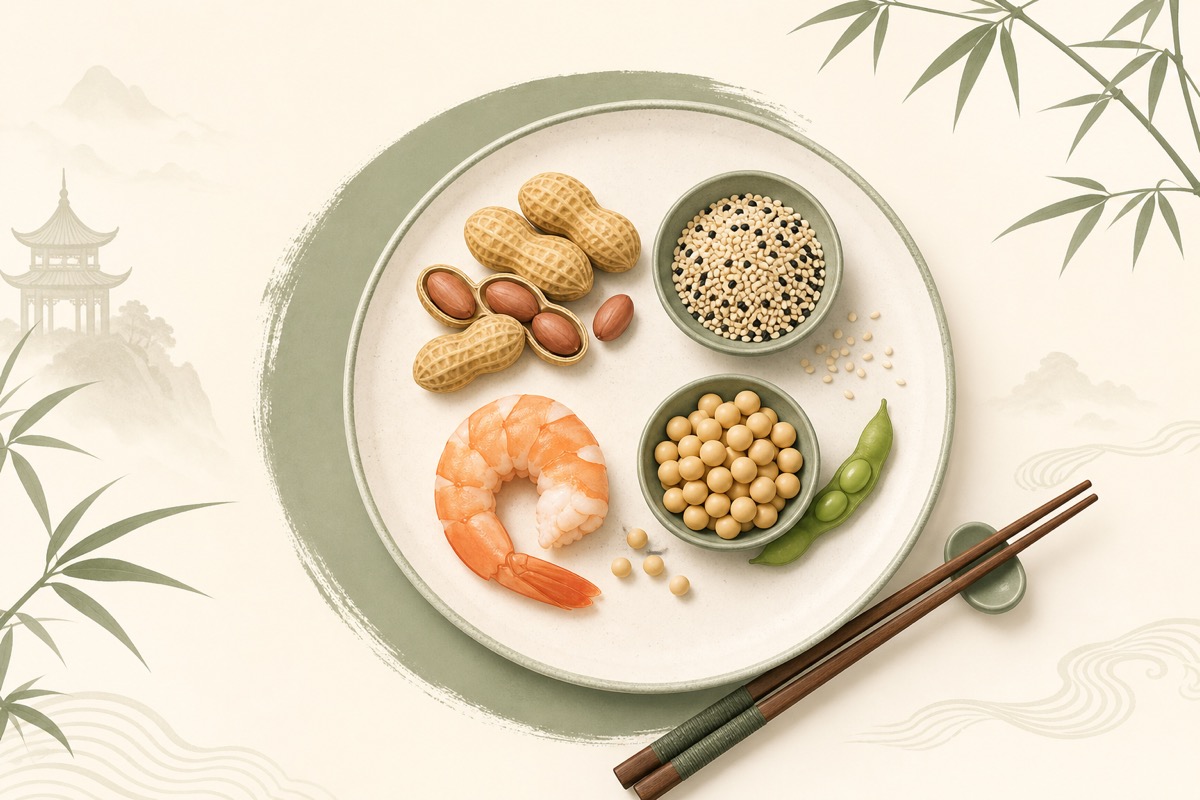
Peanuts
Peanuts are one of the most common surprises for foreign visitors. They are not limited to obvious snacks.
Watch for peanuts in:
- Kung pao chicken and other Sichuan stir-fries
- Cold noodle dishes and salads
- Chili oil in some restaurants
- Desserts and sweet soups
- Ground peanut sauce in some regional dishes
Peanut oil is less universally used than in some cuisines, but peanut-containing sauces are common. Staff may not think of crushed peanuts as an "allergy issue" if they view them as garnish.
Sesame
Sesame appears more often than travelers expect, especially as oil and paste.
Common sources include:
- Sesame paste in noodles and hot pot dipping sauces
- Sesame oil drizzled over dumplings, vegetables, and cold dishes
- Sesame seeds on bread, pastries, and desserts
- Mixed sauce bowls at hot pot or barbecue restaurants
Because sesame oil is used for aroma, staff may forget to mention it when describing a dish.
Shellfish and shrimp
Shellfish allergens are especially risky in coastal cities and seafood-heavy menus, but shrimp paste and oyster sauce appear well inland too.
Be cautious with:
- Fried rice and noodle dishes using oyster sauce
- Vegetable stir-fries finished with oyster sauce
- Xiao long bao and dumplings with mixed fillings
- Stock bases in seafood restaurants
- Fermented sauces in some regional cuisines
Even if you order chicken or tofu, oyster sauce can still appear in the wok sauce.
Shrimp paste and hidden seafood seasonings
In some southern and southeastern dishes, shrimp paste or dried seafood products add umami. These may not be obvious from the English menu translation.
If you are allergic to finfish or shellfish, ask not only about whole seafood but also about 海鲜酱, XO sauce, and oyster sauce.
Milk and dairy
Traditional Chinese food is not dairy-heavy compared with many Western cuisines, but dairy is not absent.
You may encounter milk in:
- Bubble tea and milk tea
- Western-style bakeries and cafés
- Some desserts, cakes, and coffee drinks
- Fusion restaurants
Savory classic dishes rarely use cream the way Western cooking does, but modern urban menus increasingly include dairy, especially in desserts and cafés.
Eggs
Eggs are widely used and often easy to identify, but not always.
They appear in:
- Fried rice and chow mein
- Soup dumplings and many noodles
- Marinades and batters
- Desserts such as custard tarts in Hong Kong-style bakeries
If you avoid egg, confirm both whole egg and egg used in batter or binding.
Soy
Soy is one of the hardest allergens to avoid in Chinese food because soy sauce, tofu, fermented bean paste, and soybean oil are foundational.
Complete soy avoidance makes restaurant dining very difficult. Many kitchens cannot substitute soy sauce easily without changing the dish entirely. Travelers with soy allergy should focus on:
- Plain steamed rice
- Simply prepared meat or seafood confirmed without marinade
- Hotels or restaurants willing to cook separately
- Self-catering options when necessary
If your allergy is to specific soy products rather than all soy, clarify exactly which forms you must avoid.
Wheat and gluten
Noodles, dumpling wrappers, steamed buns, fried coatings, and many sauces contain wheat. Gluten-free dining is possible but requires planning. Rice-based dishes are the most straightforward starting point, but sauce contamination remains a concern.
Ask whether:
- The dish uses soy sauce
- The meat was marinated in sauce containing wheat
- Separate clean cookware is available
Tree nuts beyond peanut
Walnuts, cashews, and pine nuts appear in some stir-fries and desserts. These are usually easier to spot than peanut or sesame, but still ask in upscale or modern Chinese restaurants where mixed nut garnishes are common.
Cross-contact and shared equipment
Even when a dish is naturally free of your allergen, cross-contact can occur through:
- Shared woks and ladles
- Fryer oil used for multiple items
- Chopping boards and prep surfaces
- Pre-made chili oil or sauce containers
For mild intolerance, this may be acceptable. For anaphylaxis, treat busy street kitchens and buffet-style service with extra caution.
How to ask before you order
Preparation matters more than perfect pronunciation.
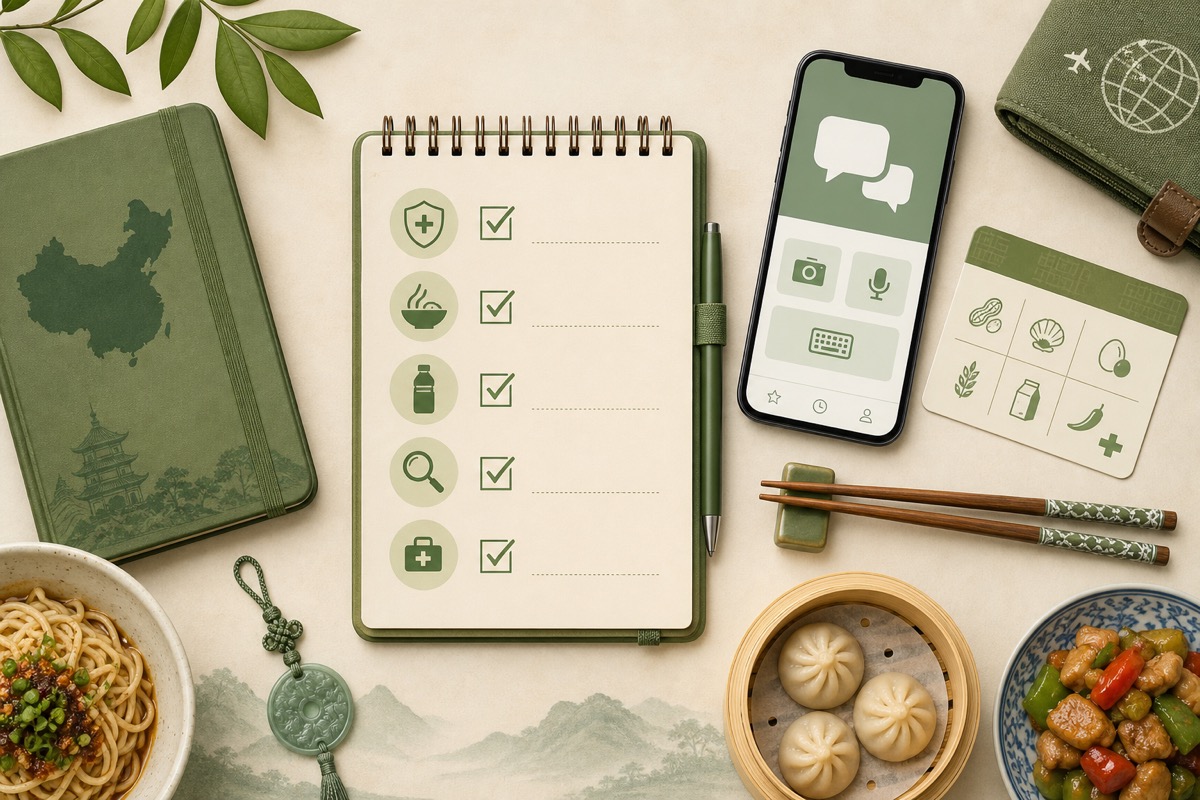
Before your trip:
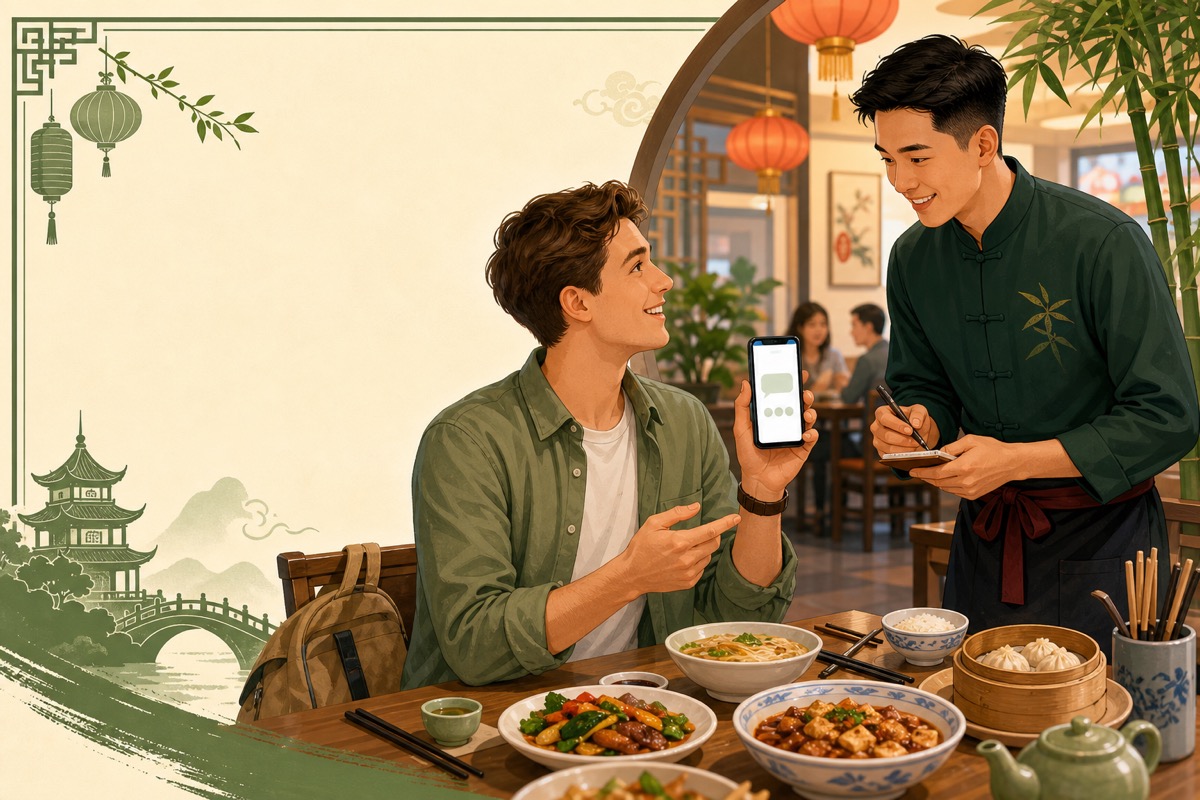
- Save a clear allergy note in Chinese on your phone.
- Carry a printed allergy card if possible.
- Know the exact names of the ingredients you must avoid, not just the English category.
At the restaurant:
- Show the note immediately, not after ordering.
- Ask about sauce, oil, stock, and garnish separately.
- Confirm whether the dish can be made without the ingredient and without shared contaminated tools if your allergy is severe.
- If staff hesitate or guess, choose another dish.
Useful questions include:
- "I am allergic to peanuts. Does this sauce contain peanuts?"
- "Can you make this without oyster sauce?"
- "Does this use sesame oil?"
Restaurant types that may be easier
Depending on your allergen, these options can help:
- Hotels with English-speaking staff
- Large chain restaurants with standardized recipes
- Seafood-only or beef-only specialty shops where the main protein is clearer
- Self-service supermarkets with packaged ingredient labels
Street food can be delicious, but it is usually the hardest place to verify ingredients precisely.
Build a personal safe-order list
Instead of trying to evaluate every dish in China, prepare a short list of options that worked after careful confirmation. Examples might include:
- Steamed fish with ginger and scallion, sauce on the side
- Plain rice with separately cooked vegetables
- Simple grilled skewers confirmed without marinade
Your safe list will vary by city, severity, and language support.
When to be more conservative
Choose a safer option if:
- Staff cannot confirm ingredients confidently
- The dish includes mixed sauce you cannot parse
- You are in a rush at a crowded street stall
- Your allergy is severe and the kitchen looks highly cross-contaminated
Missing one meal is always better than taking an unclear risk.
Final thoughts
Chinese cuisine is sauce-rich, varied, and deeply regional. That makes allergy management harder, but not impossible. The travelers who do best are not the ones who memorize every dish. They are the ones who know their highest-risk allergens, communicate early, and stay flexible when confirmation is uncertain.
Just off the plane and only worried about peanuts? Start with what to eat in China with a peanut allergy. For the packing list and phrases, see the food safety checklist and dining phrases.