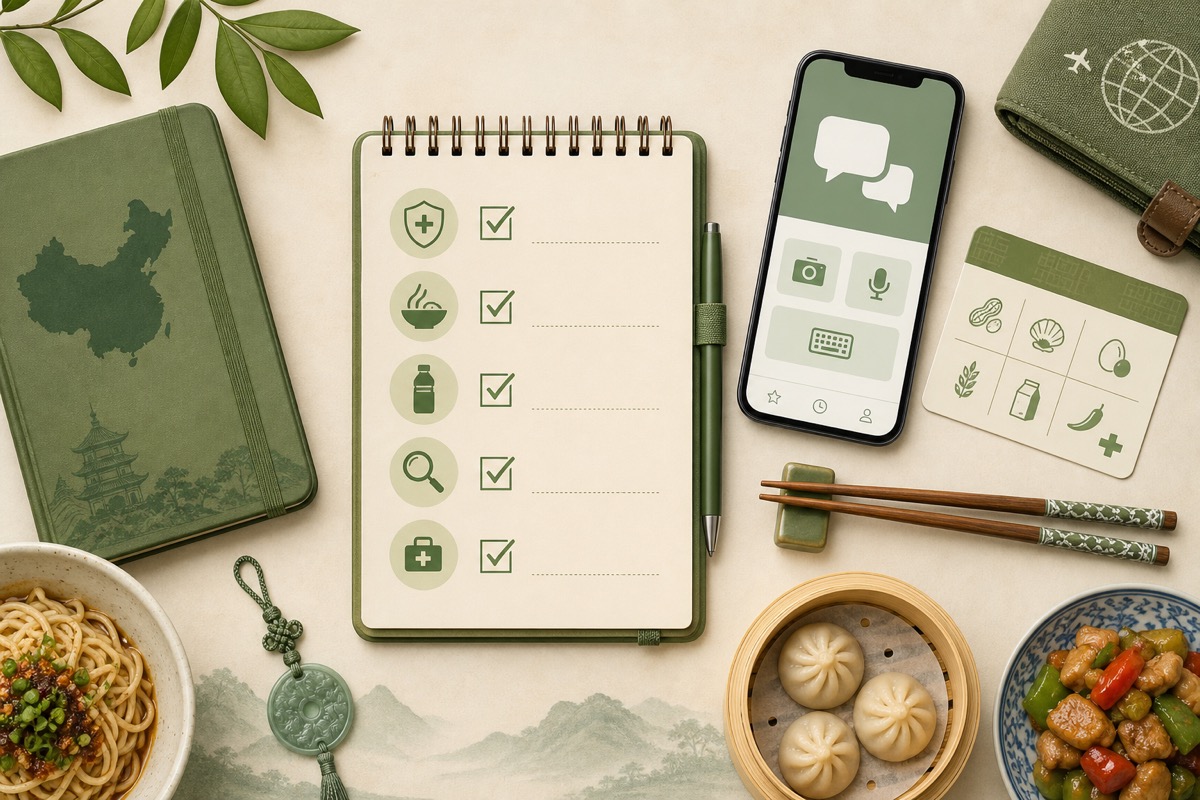
Eating in China should be one of the highlights of your trip, not a source of constant worry. The best way to make that happen is preparation. A simple checklist before and after arrival helps you avoid common mistakes with allergens, hidden pork, translation gaps, and rushed ordering.
Use this guide as a practical workbook, not a list of things to fear.
Before you depart
Download the tools you will actually use
Install and test:
- A translation app with offline Chinese support
- A QR scanner if your phone camera does not open links smoothly
- A map app with saved restaurant categories such as halal or vegetarian
- Any AI assistant you prefer for rewriting dietary notes into Chinese
Do not wait until you are hungry on your first night to discover your app needs setup.
Prepare your dietary note in Chinese
Write a short, clear note covering:
- Foods you cannot eat
- Allergies
- Whether lard, stock, and cross-contact matter
- Safe proteins you prefer
Save it as a screenshot and as editable text. You will use it constantly.
Learn the ingredients most relevant to you
You do not need to study all of Chinese cuisine. Focus on your own risk areas:
- Pork and lard if you avoid pork
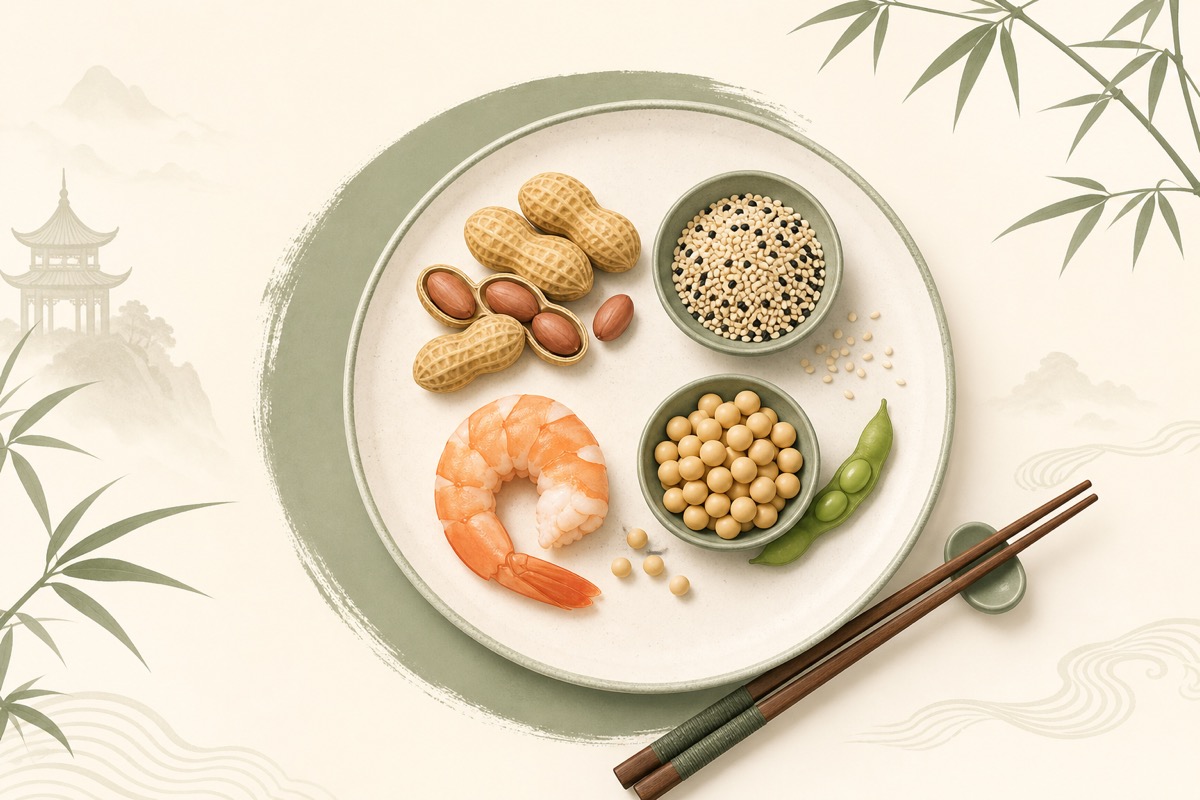
- Peanuts and sesame if you have nut allergies
- Oyster sauce and shellfish if seafood is a problem
- Egg and dairy if you are vegan
Read one or two focused guides rather than trying to memorize every dish in the country.
Pack the essentials
Depending on your needs, bring:
- Allergy medication
- Printed allergy cards
- Snacks you trust for emergency hunger
- A list of safe fallback foods
This is especially important for severe allergies or medical diets.
Save a few restaurant types to search on arrival
Examples:
- Halal restaurants
- Buddhist vegetarian restaurants
- International hotels
- Dumpling or noodle shops with picture menus
Having categories ready saves time when you are tired.
On the flight and at arrival
Set your phone up for immediate use
Confirm mobile data, roaming, or local SIM/eSIM works before leaving the airport. Translation and maps depend on it.
Adjust expectations early
China's food culture is rich in sauces, shared dishes, and regional variation. Flexibility helps. Perfect certainty is not always realistic in small local kitchens.
After you arrive: your first day checklist
- Save your hotel address in Chinese
- Locate one nearby supermarket or convenience store
- Identify one easy dinner option within walking distance
- Test your translation app on a real menu photo
- Pin one halal, vegetarian, or otherwise suitable restaurant on your map
Your first day is about building infrastructure, not finding the best meal of the trip.
How to order safely once you are in restaurants
Step 1: Choose the right restaurant for your risk level
If you have strict dietary needs, a specialist restaurant beats a random street stall.
Step 2: Show your note before ordering
Do not explain restrictions after the food is already cooking.
Step 3: Ask about three layers
- Main protein
- Cooking oil or fat
- Broth or sauce base
These three questions prevent many mistakes.
Step 4: Prefer simpler dishes when unsure
Plain rice, steamed fish, confirmed vegetable dishes, and clearly labeled halal or vegetarian options are safer than complex house specials.
Step 5: Confirm spice level if needed
Spice is not an allergy issue for most people, but it can ruin a meal if you assume a dish is mild.
How to confirm ingredients without offending staff
Most restaurant staff appreciate clear, polite notes. Problems usually come from vagueness, not from having dietary needs.
Good approach:
- Smile
- Show written Chinese
- Point to the menu item
- Ask one specific question at a time
If staff cannot confirm, thank them and choose another dish.
Avoid accidental mistakes in common situations
Shared hot pot: Broth and dipping sauces may contain allergens or pork products.
Buffets and food courts: Cross-contact is more likely.
Translated menus: Helpful but unreliable for strict needs.
"Just a little" meat or lard: Kitchens may consider this normal unless you explicitly forbid it.
Rushed group meals: Do not let social pressure push you into eating something unverified.
Daily habits that keep you safe
- Eat breakfast or lunch at a place you trust, then experiment at dinner
- Keep one safe snack with you
- Photograph menu items that worked well
- Build a personal safe list city by city
- Reconfirm restrictions at every new restaurant, even within the same trip
If something goes wrong
If you notice the wrong ingredient before eating, speak up immediately. If you have a reaction, use your medication and seek medical help according to your plan.
For travelers with severe allergies, know how to say you need help and keep emergency information accessible on your phone.
Before each new city on your itinerary
Repeat a mini-checklist:
- Search halal or vegetarian options
- Save one easy restaurant near your accommodation
- Check whether the local cuisine is heavier on pork, seafood, or spice
- Read one guide relevant to that region
Food culture shifts by province more than many travelers expect.
Final thoughts
Safe eating in China is mostly about preparation, communication, and choosing the right restaurant for the level of certainty you need. You do not have to speak fluent Chinese. You do not have to avoid local food. You do need a system.
If you are building that system now:
- What to eat with a peanut allergy
- First meal if you don't eat pork
- Allergens that hide in Chinese food
- Still packing? Can I bring food into China?
Travel hungry, but travel prepared.