
You do not need fluent Chinese to eat well in China, but a short list of practical dining phrases can save you from awkward meals and genuine dietary mistakes. The goal is not perfect pronunciation. The goal is clear communication with staff who may not speak much English but are often willing to help if your request is specific.
Save these phrases on your phone before you travel. Show them when ordering, not after the food arrives.
I cannot eat pork
Chinese: 我不能吃猪肉。
Pinyin: Wǒ bù néng chī zhūròu.
English: I cannot eat pork.
This is one of the most important phrases for many travelers. Use it early in the conversation, not as an afterthought.
I am allergic to peanuts
Chinese: 我对花生过敏。
Pinyin: Wǒ duì huāshēng guòmǐn.
English: I am allergic to peanuts.
For severe allergies, follow with "Please do not put peanuts in this dish" and show the phrase again when confirming.
Please do not make it spicy
Chinese: 请不要放辣。
Pinyin: Qǐng bú yào fàng là.
English: Please do not make it spicy.
Useful in Sichuan, Hunan, and Chongqing, where default spice levels can be intense for visitors.
I am vegetarian
Chinese: 我是素食主义者。
Pinyin: Wǒ shì sùshí zhǔyì zhě.
English: I am vegetarian.
In many contexts, simply saying 我吃素 (Wǒ chī sù — I eat vegetarian food) is also understood.
Do you have chicken?
Chinese: 有没有鸡肉?
Pinyin: Yǒu méiyǒu jīròu?
English: Do you have chicken?
Helpful when scanning a menu and trying to identify protein options.
Do you have beef?
Chinese: 有没有牛肉?
Pinyin: Yǒu méiyǒu niúròu?
English: Do you have beef?
Useful in halal restaurants and regular eateries alike.
Extra phrases worth saving
These lines solve many common restaurant problems:
No meat, no seafood.
Chinese: 不要肉,不要海鲜。
Pinyin: Bú yào ròu, bú yào hǎixiān.
Please use vegetable oil only.
Chinese: 请只用植物油。
Pinyin: Qǐng zhǐ yòng zhíwù yóu.
Does this contain oyster sauce?
Chinese: 这个有蚝油吗?
Pinyin: Zhège yǒu háo yóu ma?
Does the soup have meat stock?
Chinese: 汤里有肉汤吗?
Pinyin: Tāng lǐ yǒu ròu tāng ma?
Less spicy, please.
Chinese: 请做清淡一点。
Pinyin: Qǐng zuò qīngdàn yīdiǎn.
Can I have the bill?
Chinese: 买单。
Pinyin: Mǎidān.
How to use these phrases effectively
Show the Chinese text. Pinyin helps you speak politely, but the characters are what kitchen staff need most.
Ask one thing at a time. A long list of restrictions is harder to process in a busy restaurant. Start with the most important rule.
Confirm twice for serious allergies. Once when ordering and once when the dish arrives if possible.
Stay polite and patient. A smile and a clear note go further than speaking quickly or loudly.
Combine phrases with pictures
Phrases work best when paired with:
- A photo of the dish you want
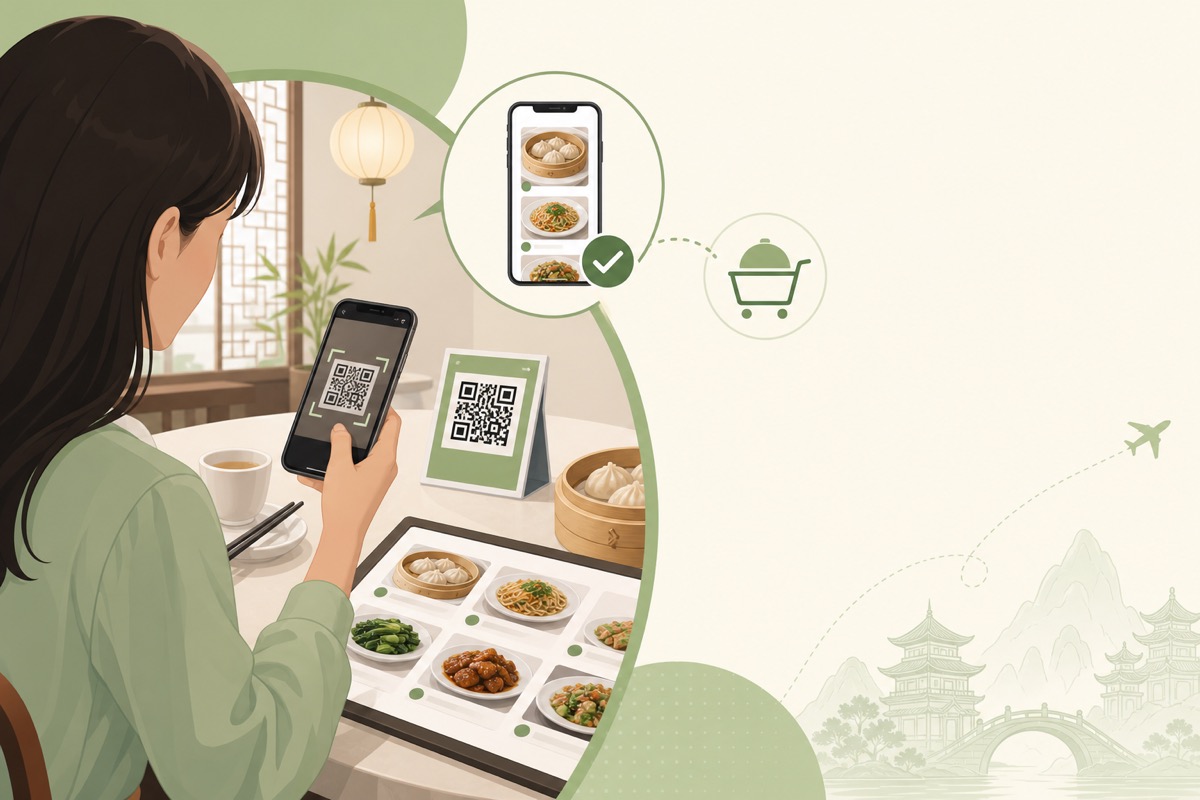
- A translation app
- A simple allergy card
- Finger pointing at menu items
Communication in China is often visual plus verbal, not verbal alone.
When staff say yes too quickly
If you have a serious dietary restriction and staff answer instantly without checking the kitchen, ask again or choose a simpler dish. A confident guess is not the same as confirmation.
Build your own phrase card
Before your trip, create a note on your phone with:
- Your main dietary rule
- Your top three allergens
- Two or three safe proteins you can eat
- One phrase asking about soup and cooking oil
That custom card will be more useful than a long generic list.
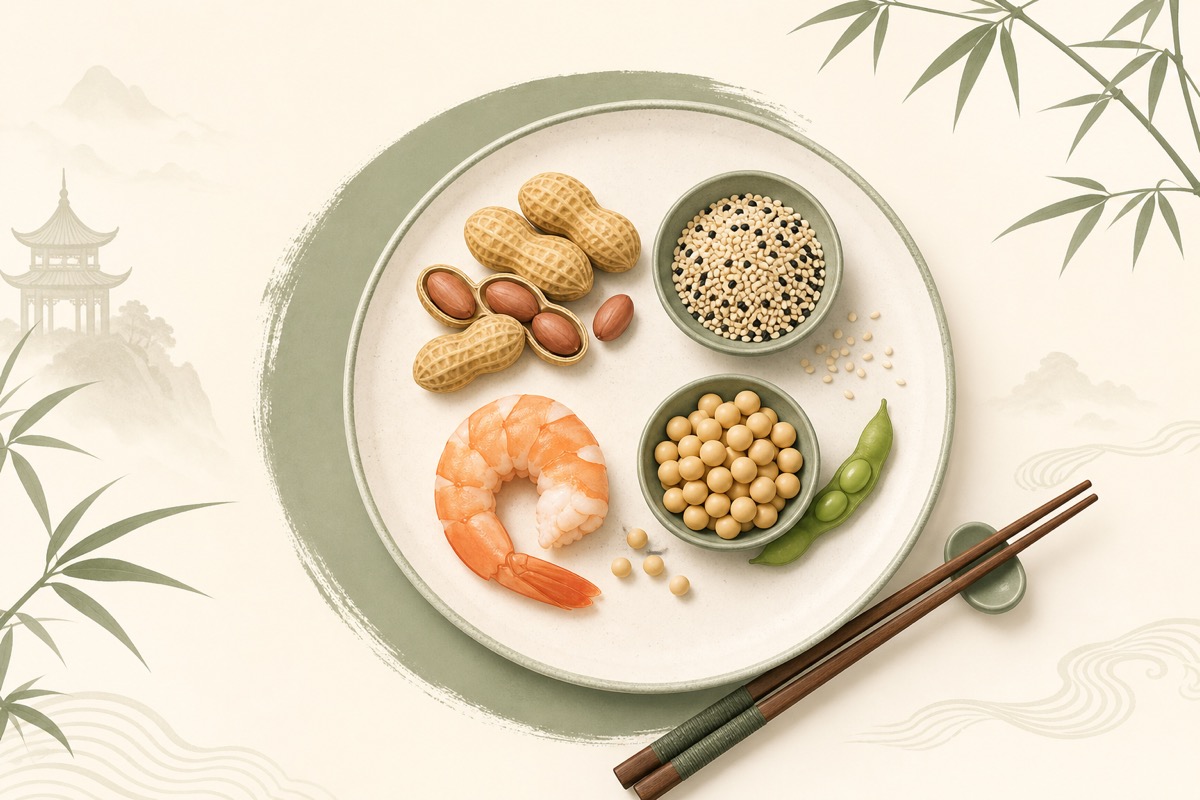
Phrases for checking common allergens
If allergies are part of your trip planning, these additions are worth saving:
I am allergic to shellfish.
Chinese: 我对贝类过敏。
Pinyin: Wǒ duì bèilèi guòmǐn.
I am allergic to eggs.
Chinese: 我对鸡蛋过敏。
Pinyin: Wǒ duì jīdàn guòmǐn.
Does this contain sesame?
Chinese: 里面有芝麻吗?
Pinyin: Lǐmiàn yǒu zhīma ma?
These questions are especially useful because sesame and shellfish appear in sauces and garnishes that staff may not mention unless asked directly.
Practice once before your first restaurant visit
Read through your saved phrases aloud once in your hotel room. You do not need perfect tones. You need enough familiarity to say "please" and "thank you" naturally while showing the written Chinese version for accuracy.
Thank you.
Chinese: 谢谢。
Pinyin: Xièxie.
That small politeness makes staff far more willing to help with a longer dietary note.
When you are eating with a group
Group meals in China often involve shared dishes, which makes hidden ingredients harder to track. If you have strict dietary needs, mention them before the group starts ordering. You can also ask for one separate dish cooked simply while still joining the shared table experience.
Most hosts appreciate knowing early rather than discovering a problem after the food arrives.
Final thoughts
These phrases will not solve every restaurant situation, but they remove a huge amount of uncertainty. Most travelers do not need language mastery. They need a few reliable sentences and the confidence to show them at the right moment.
Next, read how to order food without speaking Chinese and common food allergens in Chinese cuisine.