Choose the Right Phrase When Ordering
These phrases do different jobs. Use a request when ordering, and a question when checking a dish.
| What you mean |
Chinese |
Pinyin |
| I don’t eat pork — your dietary requirement |
我不吃猪肉。 |
Wǒ bù chī zhūròu. |
| Please don’t add pork — a request to the kitchen |
请不要放猪肉。 |
Qǐng búyào fàng zhūròu. |
| Does this dish contain pork? — a question |
这个菜里有猪肉吗? |
Zhège cài lǐ yǒu zhūròu ma? |
没有猪肉 (Méiyǒu zhūròu) means “there is no pork.” It describes the food; by itself, it does not tell staff what you want them to do. When ordering, use 我不吃猪肉 or 请不要放猪肉 instead.
The Short Answer
Chicken, beef, lamb, fish, eggs, and vegetables give you plenty of starting points, depending on what else you eat. Check three things: the main ingredient, the cooking fat, and the broth or sauce.
A restaurant displaying 清真 (halal) is worth looking for if you avoid pork. At other restaurants, ask about the particular dish. “Beef noodles” tells you what is on top, but it doesn't answer your question about the soup.
What Usually Happens in China
Pork can be a small part of a dish rather than the main event. A little mince on tofu or lard in a pan of greens may not appear in the English menu description. Recipes also change from one kitchen to the next.
Ask before the order goes through. Leaving off a topping may be possible; changing a pot of broth that was made earlier usually isn't. If the answer is uncertain, ask what the kitchen can prepare without those ingredients instead.
For more examples of ingredients that are easy to miss, see where pork hides in Chinese food.
Common Dishes to Watch Out For
| Dish / Chinese menu name |
What to check |
What to ask |
| Mapo tofu / 麻婆豆腐 |
The mince may be beef or pork; tofu doesn't mean meat-free |
Is the mince pork or beef? Can you make it without pork? |
| Dumplings and baozi / 饺子、包子 |
A filling named after cabbage or chives can also contain pork |
Which fillings have no pork? |
| Dan dan noodles / 担担面 |
Check the minced-meat topping and the sauce |
Can this be made without pork, including the sauce? |
| Soup noodles / 汤面 |
Broth is separate from the meat listed on the menu; clear soup is not proof |
Is the broth made with pork bones? |
| Stir-fried greens / 炒青菜 |
Check for lard and added mince |
Can you use vegetable oil, with no pork or lard? |
| Fried rice / 炒饭 |
Ham, char siu, or pork floss may be mixed in |
Can you make egg fried rice without ham or other pork? |
| Hot and sour soup / 酸辣汤 |
Some versions include shredded pork or pork stock |
Does the soup or stock contain pork? |
| Wontons / 馄饨 |
Check both the filling and the soup; shrimp fillings can include pork |
Is there pork in the filling or broth? |
Mapo tofu is a good example of why asking beats guessing: this recipe uses either pork or beef. A recipe can show you what to check, but only the restaurant can tell you what is in today's version.
Useful Chinese Phrases
Point to the dish while showing the question. 猪肉 means pork, 猪油 means lard, and 猪骨汤 means pork-bone broth.
| English |
中文 |
Pinyin |
| Does this dish contain pork? |
这个菜里有猪肉吗? |
Zhège cài lǐ yǒu zhūròu ma? |
| I can eat chicken and beef |
我可以吃鸡肉和牛肉 |
Wǒ kěyǐ chī jīròu hé niúròu |
| Please use vegetable oil, not lard |
请用植物油,不要用猪油 |
Qǐng yòng zhíwùyóu, búyào yòng zhūyóu |
| Is the soup made with pork bones? |
这个汤是用猪骨做的吗? |
Zhège tāng shì yòng zhūgǔ zuò de ma? |
| Does the filling contain pork? |
馅里有猪肉吗? |
Xiàn lǐ yǒu zhūròu ma? |
| Is the mince pork or beef? |
肉末是猪肉还是牛肉? |
Ròumò shì zhūròu háishi niúròu? |
| Could you check with the kitchen? |
可以帮我问一下厨房吗? |
Kěyǐ bāng wǒ wèn yíxià chúfáng ma? |
If the reply is 有 (yǒu), that means “yes, it has it”; 没有 (méiyǒu) means “it doesn't.” Keep the question specific so you know what the answer refers to. “No pork in the filling” still leaves the broth to check.
Safer Options
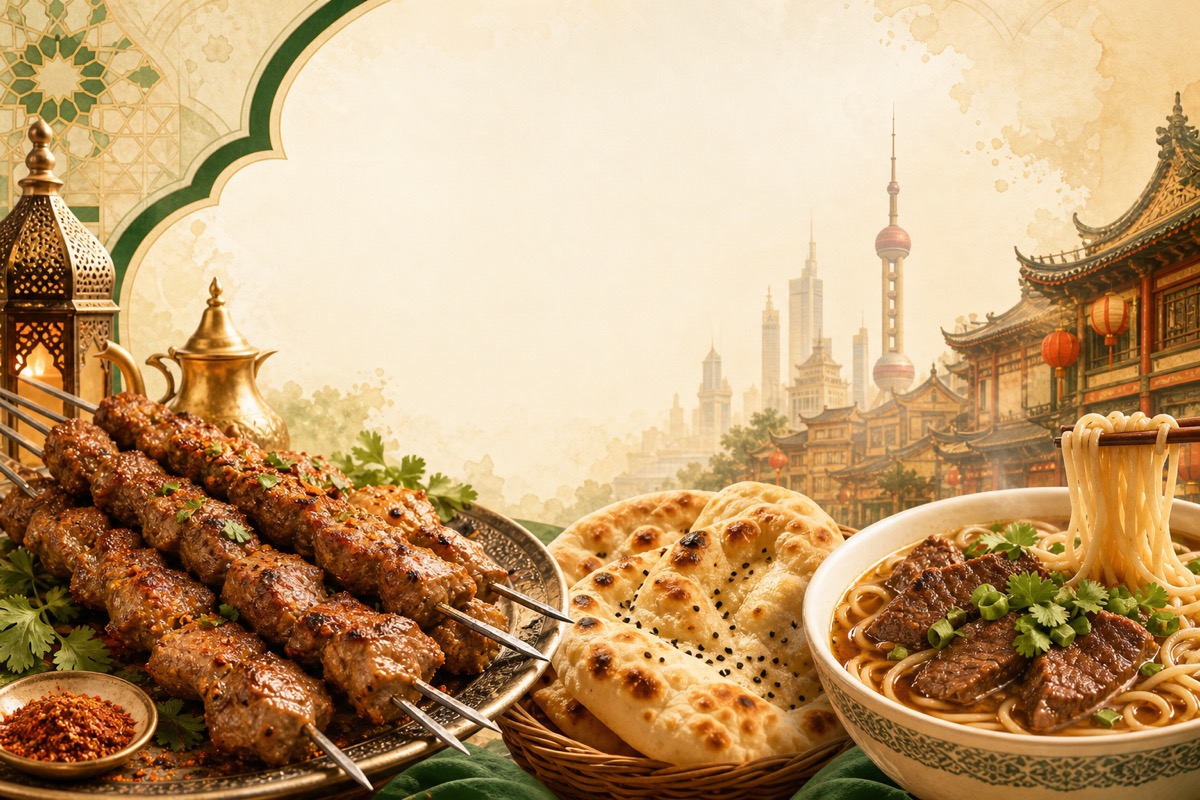
Look for 清真, not just a beef dish on the sign. Halal restaurants are a practical starting point, and you do not need to be Muslim to eat there. Menus may include beef noodles, lamb skewers, or chicken dishes. Our guide to finding halal food in China explains what to look for.
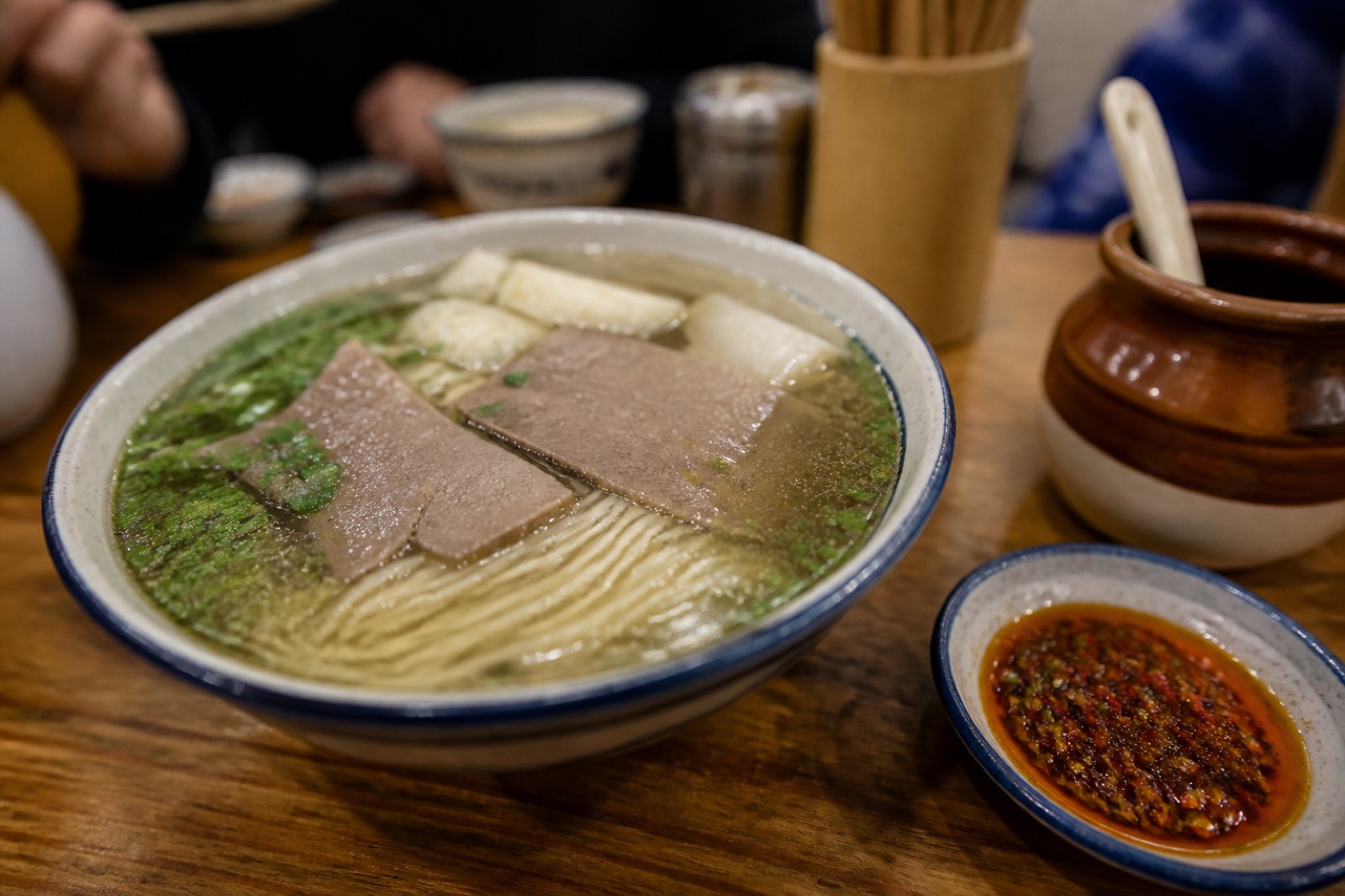
At a noodle shop, ask about the soup first. Lanzhou beef noodles are worth looking for, especially at a restaurant displaying 清真. Elsewhere, if the broth contains pork, ask whether there is a dry noodle dish whose sauce and toppings meet your needs.
Choose dishes the kitchen can explain easily. Tomato and eggs, chicken with vegetables, or steamed fish can be useful starting points. Still ask about oil, stock, and additions. Fish and seafood give you more choices; they don't make every preparation pork-free.
If you're tired and hungry, narrow the choice before sitting down. Find a nearby restaurant displaying 清真, or show the note and ask staff to suggest two dishes they can make. That is easier than checking ten unfamiliar menu items. For a shorter plan, use first meal in China when you don't eat pork.
No Pork, Halal, and Allergies Are Different Requests
“No pork” tells staff about one ingredient you avoid. It does not tell them that you need halal meat or particular preparation practices. If you need halal food, say 我需要清真食品。 (Wǒ xūyào qīngzhēn shípǐn. — “I need halal food.”) and confirm the restaurant can meet that requirement.
An allergy is another request again. Don't describe a preference or dislike of a smell as an allergy. If you do have an allergy, explain it separately, including your requirements around shared equipment; the no-pork note above does not cover that.
Final Tip
Save the Chinese note before you head out. When you order, show it and point to the dish you want. One clear question about the soup or cooking oil is more useful than guessing from the photo.