If you do not eat pork for religious, cultural, or personal reasons, China can feel surprisingly tricky. Pork is not just one menu category. It is a background ingredient in stocks, stir-fries, dumpling fillings, noodle toppings, and even some dishes that sound entirely vegetable-based.
That does not mean eating safely is impossible. It means you need to understand how Chinese cooking works, which dish names are misleading, and what questions to ask before you order.
Why pork appears in so many Chinese dishes
Pork has been a central protein in much of Chinese home cooking for centuries, especially in eastern, southern, and southwestern regions. It is affordable, flavorful, and versatile. Minced pork adds depth to sauces. Pork bones build soup bases. Lard gives stir-fried vegetables a richer finish.
In many restaurants, pork is treated less like a special ingredient and more like seasoning. A spoonful of minced pork might be added to a tofu dish to make it taste "more complete." A vegetable stir-fry may be cooked in lard because that is the default fat in the kitchen.
For local diners, this is normal and often desirable. For travelers avoiding pork, it creates invisible risk.
Dish names that do not mention pork
One of the biggest surprises for first-time visitors is that Chinese dish names often describe style, origin, or texture rather than every ingredient.
These names may sound harmless but frequently contain pork or pork fat:
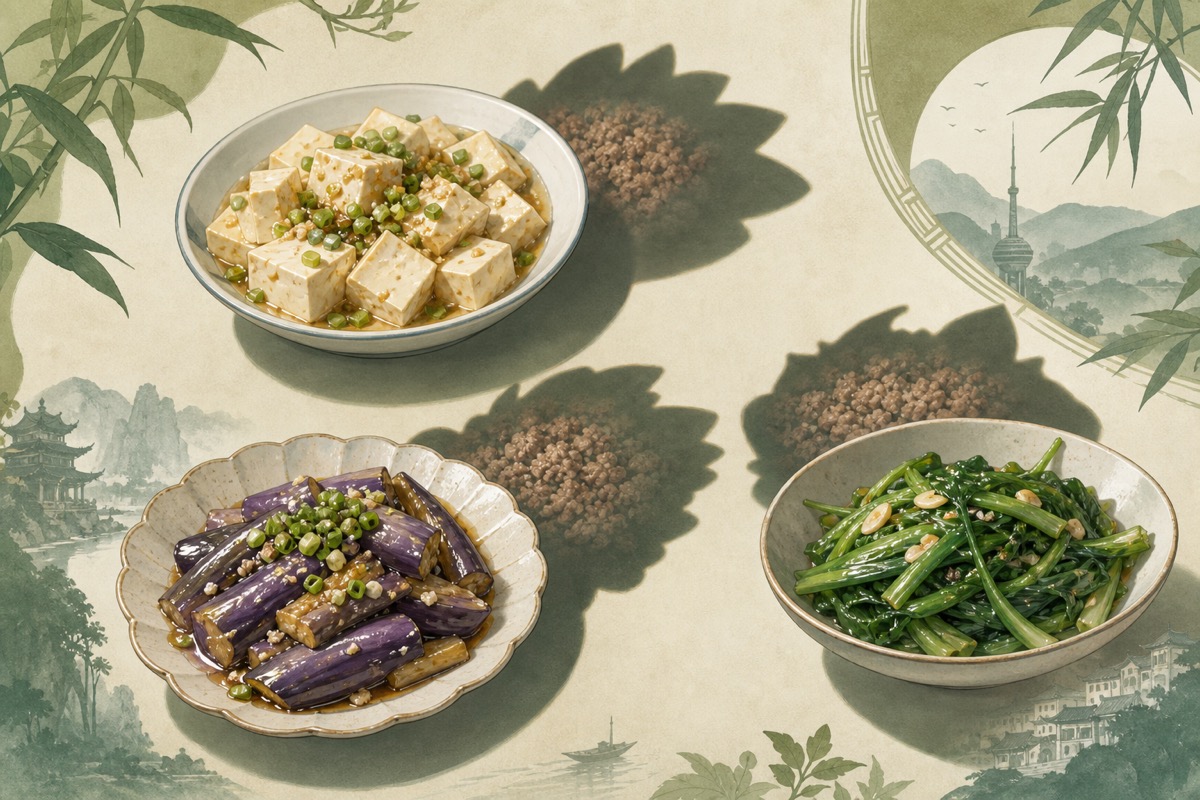
- Ma po tofu — classically includes minced pork, though some restaurants offer a pork-free version.
- Dan dan noodles — often topped with minced pork and pork-based sauce.
- Wontons and dumplings — many standard fillings mix pork with chives, cabbage, or shrimp.
- Fried rice — can include diced ham, sausage, or lard during cooking.
- Hot and sour soup — sometimes includes shredded pork.
- Mapo eggplant or mapo green beans — "mapo" flavor often comes with minced pork.
Even when a dish translates cleanly as "spicy tofu" or "green beans with garlic," the kitchen may still use pork fat for wok flavor.
Common dishes that catch travelers off guard
Some menu items look safe at first glance but deserve extra questions.
Plain-looking vegetable stir-fries. Restaurants may assume guests want vegetables to taste richer and cook them with lard or a little minced pork.
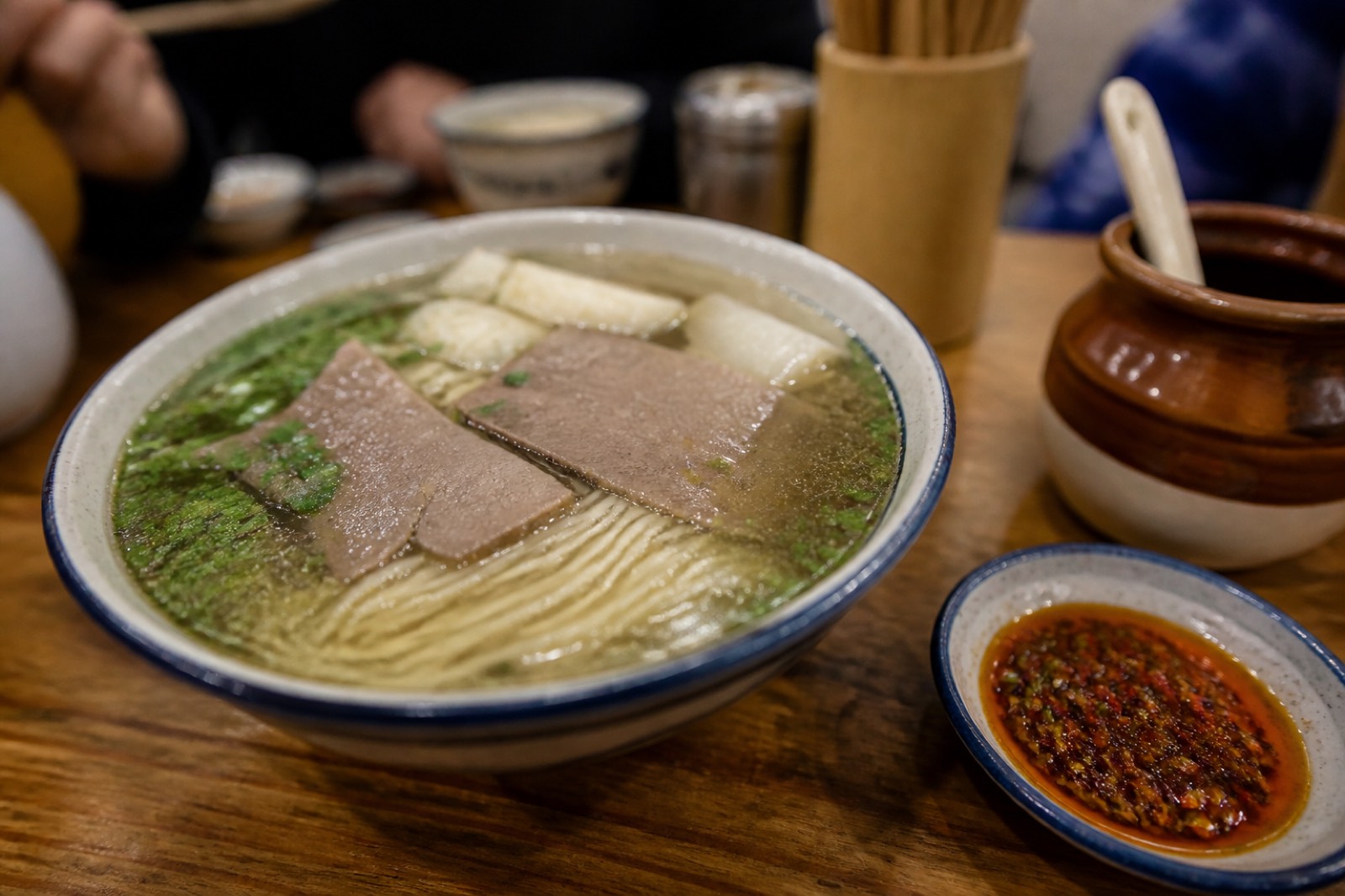
Soup noodles. Broth is often made from pork bones, chicken bones, or both. A bowl labeled "beef noodles" may still use a mixed stock.
Steamed buns and breakfast items. Baozi, shumai, and pan-fried buns commonly use pork filling unless marked otherwise.
Cold appetizers. Shredded potato, cucumber salad, or tofu skin dishes may include chili oil fried with pork, soy sauce with meat extract, or hidden bits of minced pork.
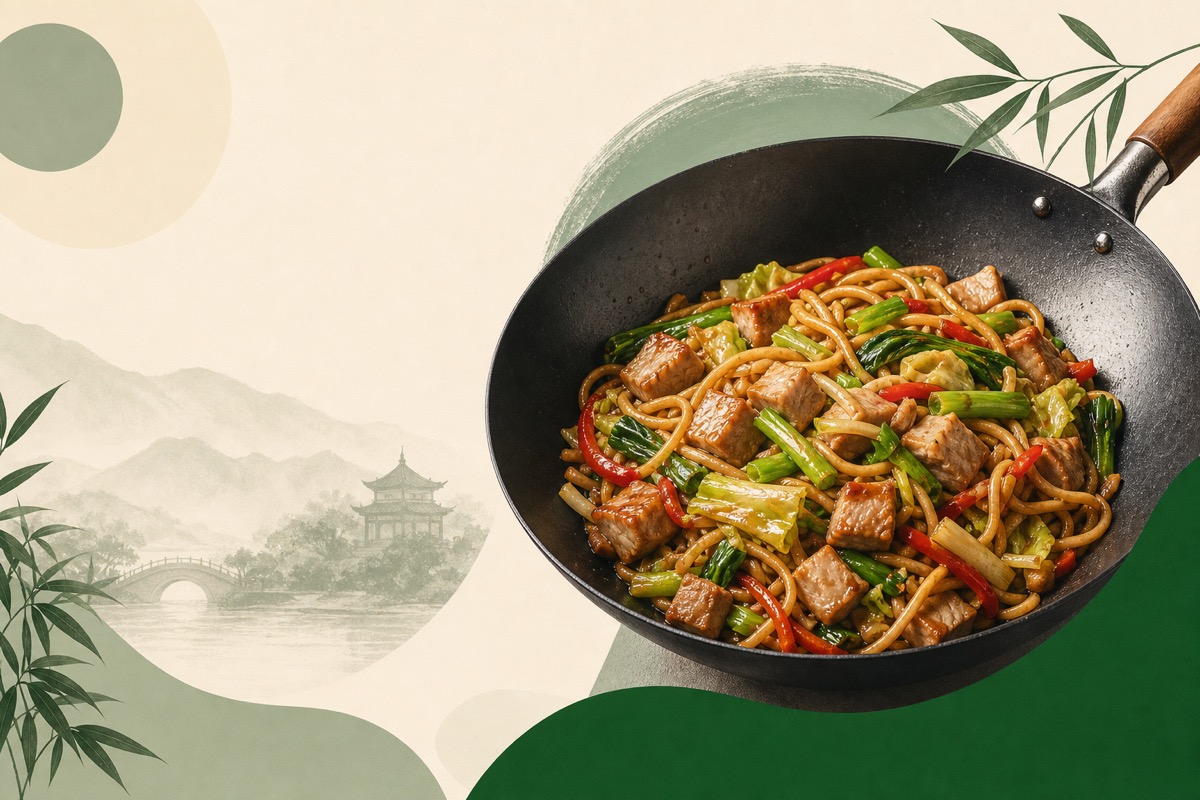
Fried noodles and chao fan. These dishes are cooked quickly in a shared wok. Even if you order shrimp or chicken, cross-contact and shared oil are possible in busy kitchens.
None of this means you should avoid Chinese food altogether. It means default menu items are not automatically safe just because they look vegetarian or poultry-based.
How Chinese kitchens use pork beyond the main protein
To order confidently, it helps to think in layers:
- Visible meat — slices, mince, sausage, ham.
- Cooking fat — lard or rendered pork fat.
- Stock — soups, hot pot bases, noodle broth.
- Seasoning — XO sauce, some chili pastes, fermented bean sauces, and meat-based condiments.
- Cross-contact — shared woks, ladles, and chopping boards in fast kitchens.
Travelers often focus only on visible meat and forget the other four layers. That is where most mistakes happen.
How to avoid ordering the wrong dish
You do not need fluent Chinese to eat more safely, but you do need a clear system.
Step 1: Decide your rule clearly. Are you avoiding all pork products, including lard and stock? Or only visible pork meat? Restaurants respond better when your request is specific.
Step 2: Use a written note. Show a short message in Chinese on your phone. Staff can show the kitchen and reduce misunderstanding.
Step 3: Ask about three things. Main meat, cooking oil, and soup base. Those three questions cover most hidden pork cases.
Step 4: Choose simpler dishes when unsure. Plain rice, grilled fish, egg dishes, or clearly labeled beef or chicken items are often easier to confirm than complex sauced dishes.
Step 5: Look for specialist restaurants when possible. Halal restaurants, Buddhist vegetarian restaurants, and some international hotels maintain stricter ingredient separation.
What to say when ordering
Useful phrases include:
- "I cannot eat pork."
- "No lard, please."
- "Is the soup made with pork bones?"
- "Can this dish be made without meat and without lard?"
If staff seem unsure, trust that uncertainty. Ask for another dish rather than guessing.
Safer categories to explore
These are not guaranteed pork-free, but they are often easier to clarify:
- Fresh seafood steamed with ginger and scallion
- Whole roast duck or chicken from a specialty shop
- Clear egg and tomato soup if broth is confirmed
- Buddhist vegetarian restaurants labeled 素食 or 净素
- Halal restaurants labeled 清真
Even in these settings, confirm your needs once. Standards vary by city and by individual restaurant.
Regional differences worth knowing
Pork use is widespread, but not identical everywhere.
In northwest China, halal food is more common in many cities, and lamb or beef dishes are easier to find. In major eastern and southern cities, pork appears constantly in everyday food. In Yunnan and some southwestern areas, ham and cured pork are especially common in local specialties.
If your trip covers multiple regions, do not assume one successful ordering experience applies everywhere.
A practical ordering checklist
Before you eat, ask yourself:
- Does this dish name hide minced meat?
- Is the menu translation too vague?
- Could the broth contain pork bones?
- Could the vegetables be cooked in lard?
- Did staff confidently confirm all three layers?
If you cannot answer those questions comfortably, pause and choose something clearer.
Final thoughts
China's food culture is deep, regional, and full of flavor. Avoiding pork takes a little more planning, but it should not stop you from enjoying the trip. The goal is not to memorize every dish in the country. The goal is to recognize patterns, ask better questions, and know when a menu item deserves extra caution.
Landing tonight and just need a first bowl? Read first meal in China when you don't eat pork. For the longer map, use eating without pork and hidden meat in vegetable dishes.