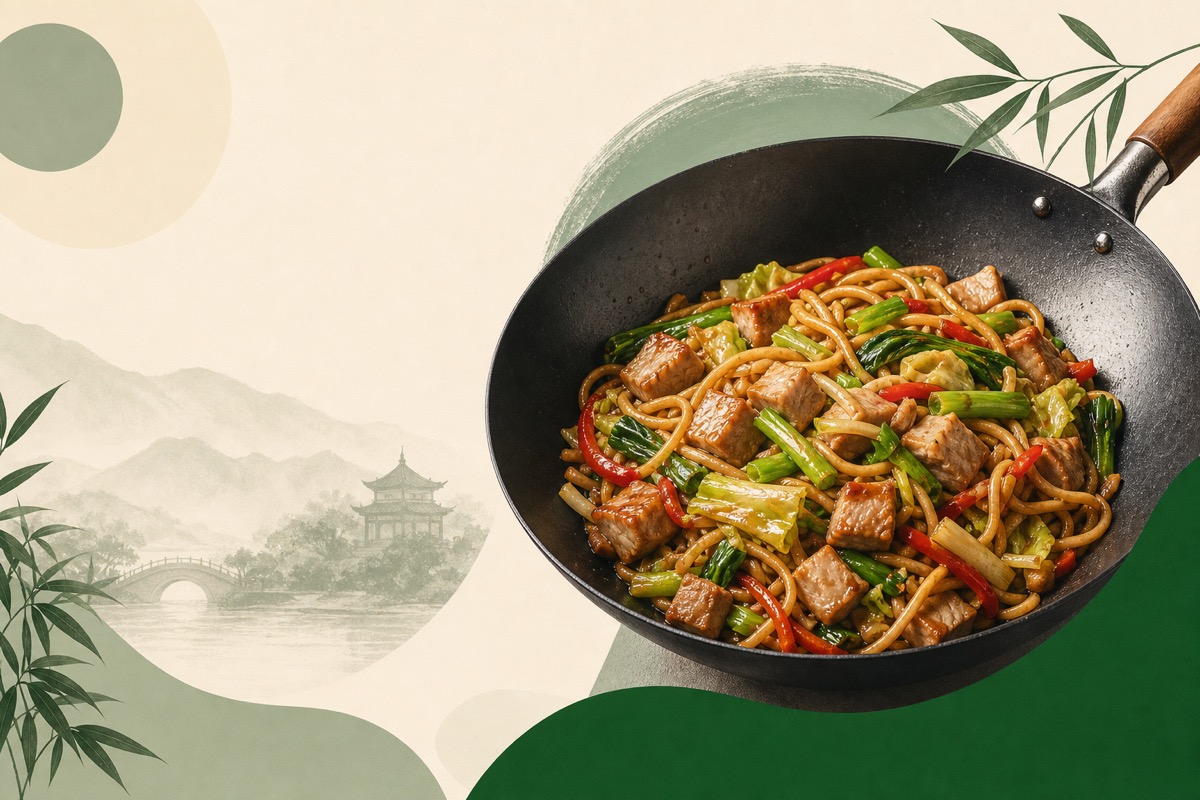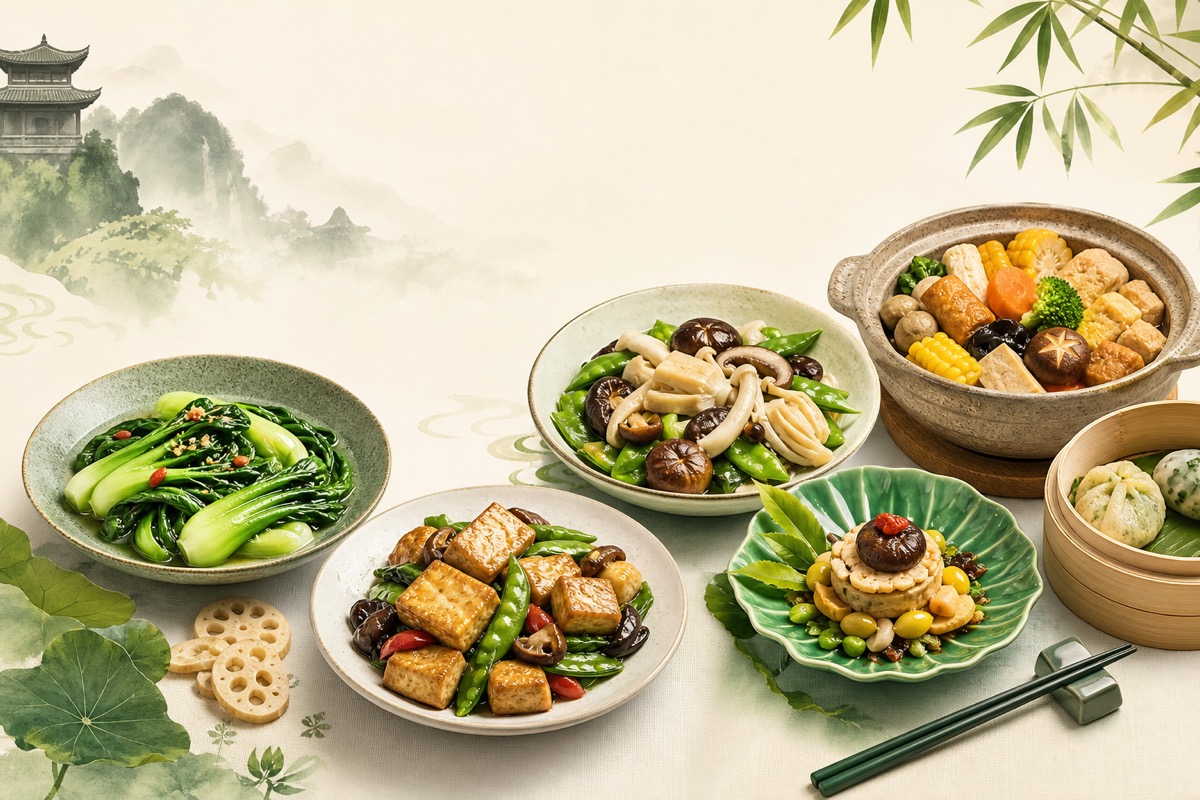
Some dishes on a Chinese menu look harmless, especially if you are scanning for obvious chunks of meat. But in many kitchens, meat is used the way salt or butter might be used elsewhere: in small amounts, out of sight, and sometimes without mention on the menu.
If you avoid pork, eat halal, or follow a vegetarian diet, these dishes deserve extra attention.
Ants climbing a tree
What it looks like: Glass noodles stir-fried with ground meat and sauce, often served in a way that resembles tiny ants on branches.
Why it catches people off guard: The meat is minced and visually blends into the noodles. Travelers focusing on vegetable side dishes may not realize this is fundamentally a meat-noodle dish.
What to ask: Whether the dish can be made without minced pork or beef.
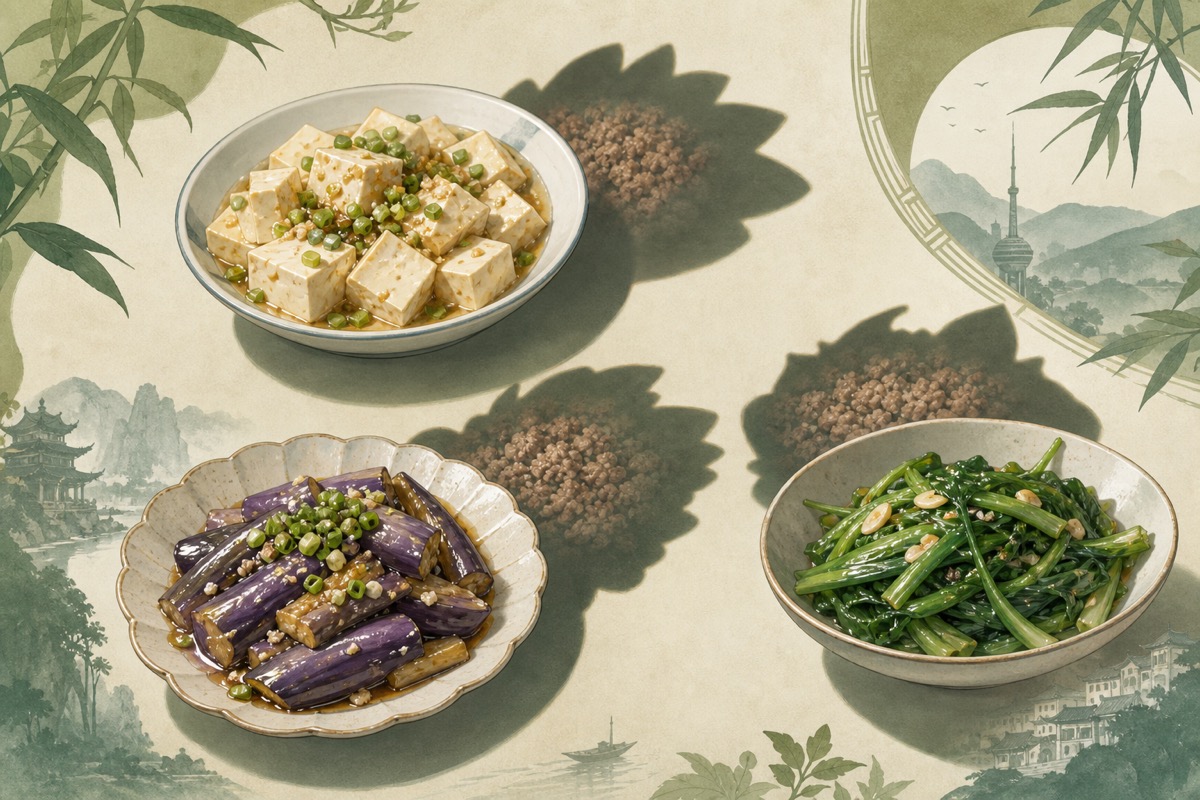
Mapo tofu
What it looks like: Soft tofu in red chili sauce.
Why it catches people off guard: Many foreigners associate tofu with vegetarian food. Classic mapo tofu, however, usually includes minced pork and sometimes beef.
What to ask: "Can you make mapo tofu without meat?"
Di san xian (three earthly treasures)
What it looks like: A comforting plate of potato, eggplant, and green pepper.
Why it catches people off guard: It appears fully vegetable-based. Some versions are vegetarian, but others are fried with meat-flavored sauce or cooked in shared wok oil with meat dishes.
What to ask: Whether the dish uses lard, meat stock, or minced meat in the sauce.
Luohan zhai (Buddha's delight)
What it looks like: A mixed vegetable and tofu ingredient stew often linked to temple cuisine.
Why it catches people off guard: The name sounds vegetarian, and many versions are. But non-specialist restaurants may use oyster sauce, meat stock, or lard.
What to ask: Whether the kitchen uses pure vegetable oil and no oyster or meat-based sauces.
Hot and sour sweet potato noodles (suan la fen)
What it looks like: A sour, spicy, slippery noodle bowl that seems simple and plant-forward.
Why it catches people off guard: Broth may be made from mixed stock, and toppings can include minced meat, peanuts, or chili oil prepared with animal fat.
What to ask: What is in the broth and topping mix.
Stir-fried green vegetables
What it looks like: The safest item on almost any menu.
Why it catches people off guard: This is one of the most common hidden-meat problems in China. A small amount of minced pork or lard is often added because many local diners prefer richer flavor.
What to ask: "Vegetable oil only, no meat, no lard."
Other dishes worth treating carefully
These do not always contain hidden meat, but they often do:
- Eggplant with garlic sauce
- Dry-fried green beans
- Fried rice
- Wonton soup
- Marinated cold tofu
- Mixed vegetable hot pot with unknown broth
The pattern is consistent: if a dish has a rich sauce, shared wok preparation, or a poetic name rather than a literal ingredient list, verify it.
The three hidden forms of meat
When evaluating a dish, separate meat into three categories:
- Visible meat — easy to spot.
- Invisible seasoning meat — mince, ham bits, sausage crumbles.
- Animal-based cooking medium — lard, meat stock, oyster sauce, or meat-flavored chili oil.
Travelers often remember the first and forget the second and third.
How to order these dishes more safely
You have four practical options:
Order at a vegetarian restaurant. The easiest path if you want classic flavors without repeated explanation.
Ask for a custom version. Works best with simple dishes like tofu or greens.
Choose a different dish entirely. Sometimes safer than modifying a meat-centered recipe.
Use halal restaurants for pork avoidance. Helpful, though not a solution for all diets.
What not to assume
Avoid these assumptions:
- Tofu dish = vegetarian
- Vegetable name = no animal products
- English menu = accurate ingredient list
- "A little meat won't matter" — staff may consider a spoonful normal
Your threshold is yours to define. Communicate it clearly.
Building a personal "avoid list" while traveling
As you move from city to city, keep a simple note of dish names that repeatedly caused confusion. Many travelers discover that their risk is not "all Chinese food," but a short list of recurring styles such as mapo sauces, oyster-based stir-fry, or vegetable dishes cooked in lard.
Updating that list after each meal takes one minute and makes the next city much easier.
When a dish is "mostly vegetable"
Some travelers assume a dish that is 90 percent vegetable is close enough. If your requirement is strict, that remaining 10 percent still matters. A small amount of minced pork, lard, or oyster sauce can be enough to break a dietary or religious rule. Clarity beats approximation when ordering.
Final thoughts
Hidden meat is one of the most practical food problems travelers face in China, not because restaurants are careless, but because local cooking traditions use meat differently. Once you know which innocent-looking dishes to double-check, eating becomes much less stressful.
Continue with hidden pork in Chinese food and vegetarian food in China.