China is not usually listed among the world's easiest countries for vegetarian travel, but it is also far from impossible. Buddhist food traditions, temple cuisine, and modern plant-based dining all exist here. The challenge is that everyday restaurant cooking often treats meat and animal fat as background flavor, not as a special add-on.
If you are vegetarian, your best experience comes from knowing which dishes are genuinely plant-based, which ones only look vegetarian, and how to communicate your needs clearly.
What "vegetarian" means in different Chinese contexts
Not every vegetarian meal in China follows the same rules.
Lay vegetarian diners may avoid meat and seafood but still eat eggs and dairy.
Buddhist vegetarian cooking often avoids meat, seafood, and sometimes pungent vegetables such as garlic, onion, and chives depending on the tradition.
Vegan travelers must also watch for lard, egg, dairy, and hidden animal-based stocks.
Before ordering, decide your own standard and use it consistently. Staff cannot help if your request changes dish by dish.
Dishes that are often truly vegetarian
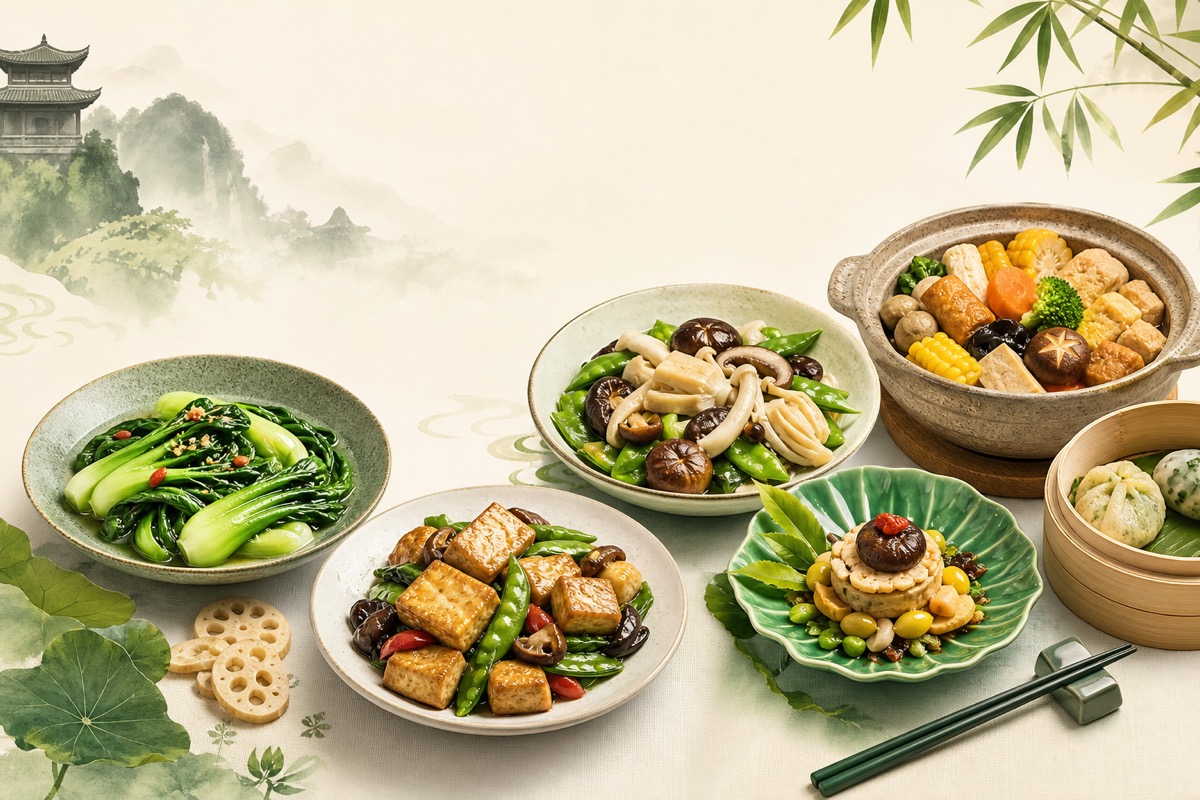
These are common starting points, especially at vegetarian restaurants or when carefully confirmed:
- Stir-fried seasonal greens if cooked in vegetable oil
- Cold cucumber or tomato dishes
- Mapo tofu without minced pork, if the kitchen can make a vegetarian version
- Braised tofu with mushrooms
- Plain rice, congee, or simple noodle dishes without meat topping
- Vegetable dumplings at specialist shops
- Buddhist vegetarian platters at dedicated 素食 restaurants
At a dedicated vegetarian restaurant, many classic "meat-style" dishes are recreated with mushrooms, tofu skin, or gluten seitan. These can be some of the safest and most interesting options.
Dishes that look vegetarian but often are not
This is where travelers get caught.
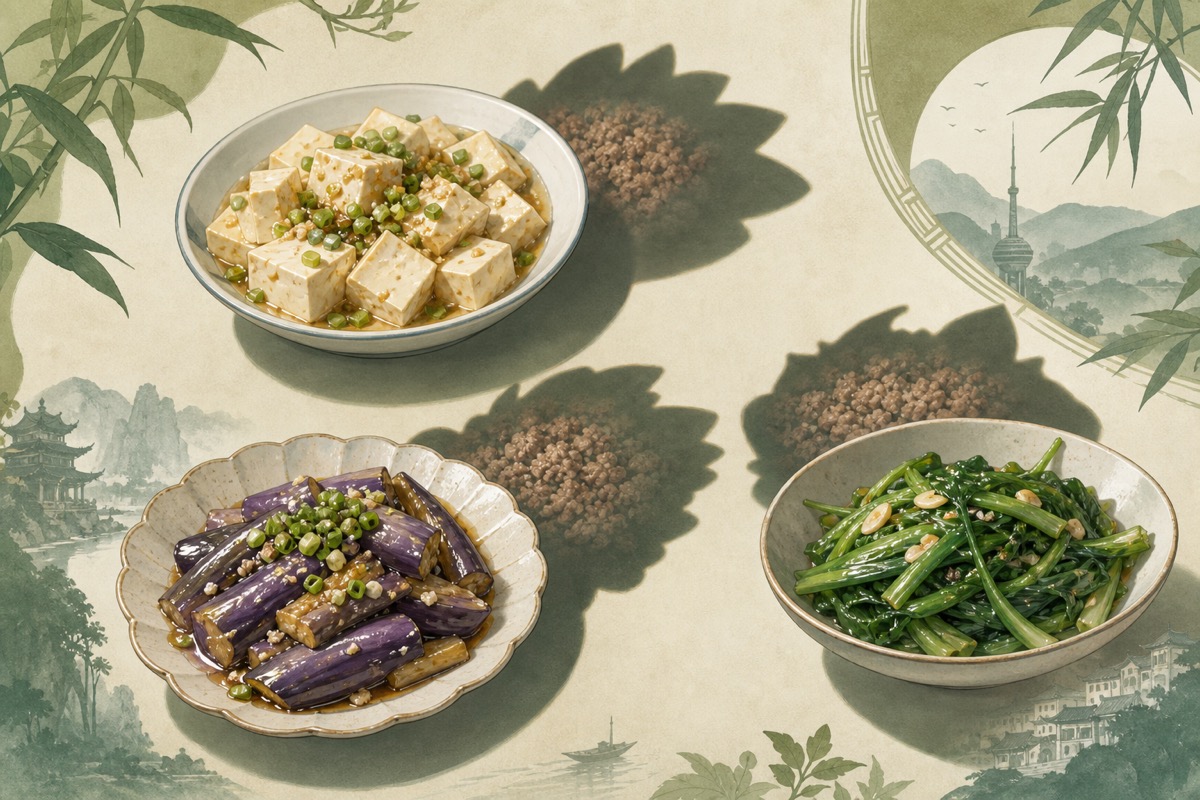
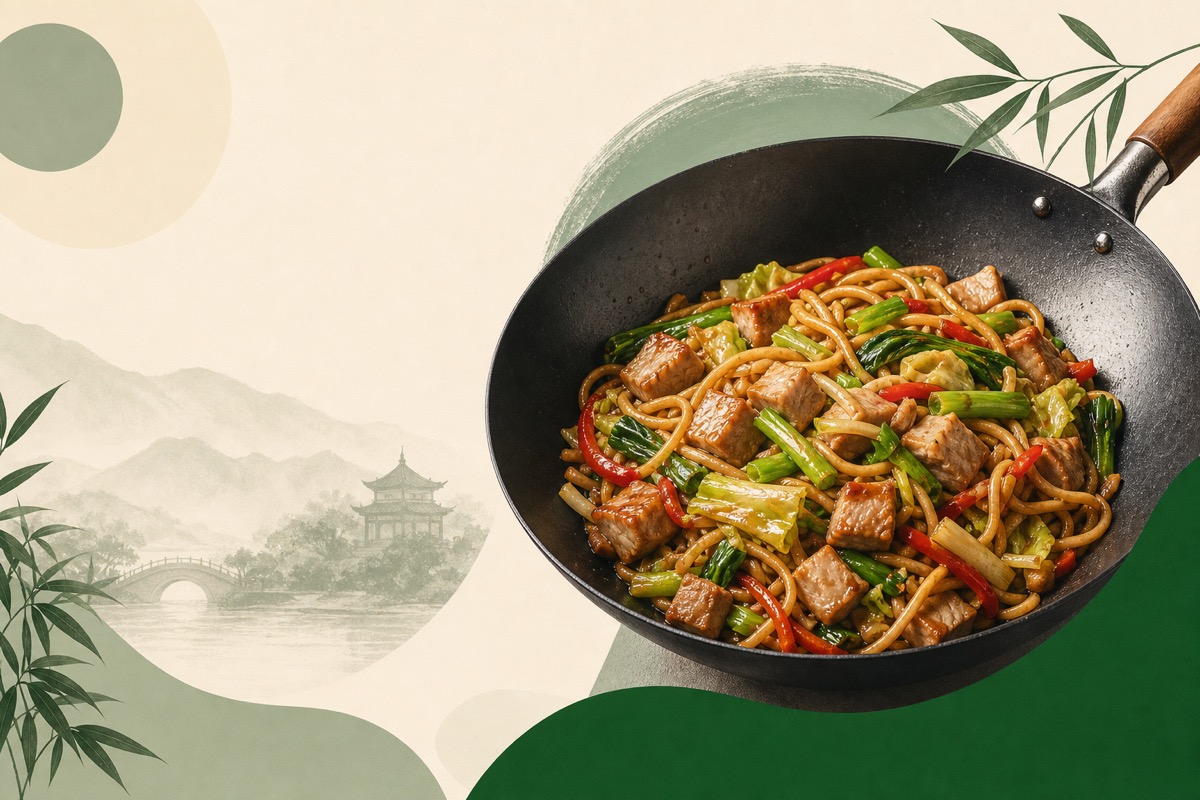
Vegetable stir-fries. Many kitchens use lard or a spoon of minced pork for flavor.
Eggplant dishes. Often cooked with garlic sauce and sometimes minced meat.
Dry-fried green beans. Frequently include minced pork or fermented meat sauce.
Hot and sour soup. May contain shredded pork or egg.
Fried rice. Often includes egg, ham, or lard unless specified otherwise.
Mapo tofu at generic restaurants. Classic versions include minced pork by default.
Roasted or stuffed vegetables. Fillings and sauces may contain meat stock or seafood paste.
Never assume green color means vegetarian.
Buddhist vegetarian restaurants are your strongest option
If you want the least stress, seek restaurants labeled 素食 or 净素. These are especially common near temples and in larger cities.
Benefits include:
- Staff understand vegetarian requests immediately
- Menus are built around plant-based cooking
- Meat-like dishes are intentionally made from plants
- Less need to explain lard, stock, or hidden mince repeatedly
Standards still vary. Some places use eggs or dairy. Some strict Buddhist kitchens avoid garlic and onion. If those details matter to you, ask before ordering.
How to order vegetarian food in a regular restaurant
Regular neighborhood restaurants can work, but you must be explicit.
Show a note that says you are vegetarian and ask for:
- No meat
- No seafood
- No lard
- No chicken or pork stock
Then choose simpler dishes. A busy wok station is more likely to accommodate "garlic broccoli in vegetable oil" than a complex house-specialty sauce.
If staff look confused, switch to rice plus one or two clearly confirmed vegetable dishes rather than forcing a modified version of a meat-heavy specialty.
Recommended dishes to explore
These are widely available and often adaptable:
Stir-fried bok choy or spinach. Simple, fresh, and easy to request without meat products.
Tomato and egg. Not vegan, but a common vegetarian-friendly option in many regular restaurants if you eat eggs.
Braised tofu with shiitake mushrooms. Rich flavor without needing meat sauce.
Vegetarian dumplings. Best at specialist dumpling shops or vegetarian restaurants.
Cold wood ear mushroom salad. Refreshing and usually plant-based, though confirm the dressing.
Vegetable hot pot. Choose a plain broth and avoid meat-based dipping sauces.
Cities and situations where vegetarian eating is easier
Major cities such as Beijing, Shanghai, Chengdu, Guangzhou, Hangzhou, and Shenzhen generally offer more vegetarian restaurants, international cafés, and health-conscious dining than smaller towns.
You will also find more options near:
- Buddhist temples
- University districts
- Shopping malls with modern restaurant floors
- International hotels
In rural areas or meat-heavy regional cuisines, options may shrink quickly. Planning ahead matters.
Vegan travelers need one extra layer of caution
If you avoid all animal products, watch for:
- Lard in vegetable dishes
- Egg in noodles and fried rice
- Milk in desserts and drinks
- Oyster sauce and shrimp paste in sauces
- Meat-based soup stock
Vegan eating is doable in cities with Buddhist restaurants and international grocery options, but casual street dining requires more verification.
Useful phrases for vegetarian diners
Helpful requests include:
- "I am vegetarian."
- "No meat, no seafood."
- "Please cook with vegetable oil only."
- "Does this soup contain meat stock?"
If possible, save these in Chinese on your phone and show them before ordering.
How to build a reliable vegetarian meal anywhere
Use this fallback formula:
- Plain rice or plain noodles
- One stir-fried green vegetable confirmed with vegetable oil
- One tofu or mushroom dish confirmed without oyster sauce
- Tea or bottled water
It is not glamorous, but it works when the menu is confusing or staff support is limited.
Final thoughts
China rewards curious eaters, including vegetarians, as long as you plan with open eyes. The country has real plant-based traditions, not just side salads adapted for tourists. Your best meals may come from Buddhist restaurants, temple-area cafés, or carefully chosen vegetable dishes at local eateries.
If you also skip pork for other reasons, first meal without pork is the night-one version. Then hidden meat in vegetable dishes and dining phrases.