Travelers who eat halal can eat well in China, but the experience varies dramatically by region. In some cities, halal food is everywhere. In others, you may need to search deliberately. The key is knowing the signs, understanding regional patterns, and choosing restaurants with clear halal identity rather than guessing from a generic menu.
What halal dining looks like in China
Halal food in China is closely linked to Muslim communities, especially Hui and Uyghur culinary traditions. You will see lamb, beef, bread, noodles, grilled skewers, and hearty wheat-based dishes more often than in many other parts of Chinese dining culture.
Halal restaurants usually advertise themselves clearly because their customer base depends on trust. That makes them easier to identify than many other specialty diets, once you know what to look for.
How to find halal restaurants
Use these practical methods:
Look for the word 清真. This is the most common marker for halal restaurants and food shops.
Watch for Arabic script. Many halal restaurants display Arabic writing alongside Chinese characters.
Search maps with the right keywords. Try "halal," "清真," " Muslim restaurant," or "lanzhou beef noodles" in your map app.
Follow local Muslim neighborhoods. Markets, street clusters, and restaurant rows often form near mosques or major community centers.
Ask hotel staff in major cities. International hotels often know nearby halal options even if they do not promote them heavily.
In tourist areas, verify authenticity rather than trusting vague labels on generic restaurants.
Common halal signs and what they mean
You may see:
- 清真 — halal
- Halal logo or certification mark — varies by region and restaurant type
- Lanzhou beef noodle signs — often halal, though verify if strict compliance matters
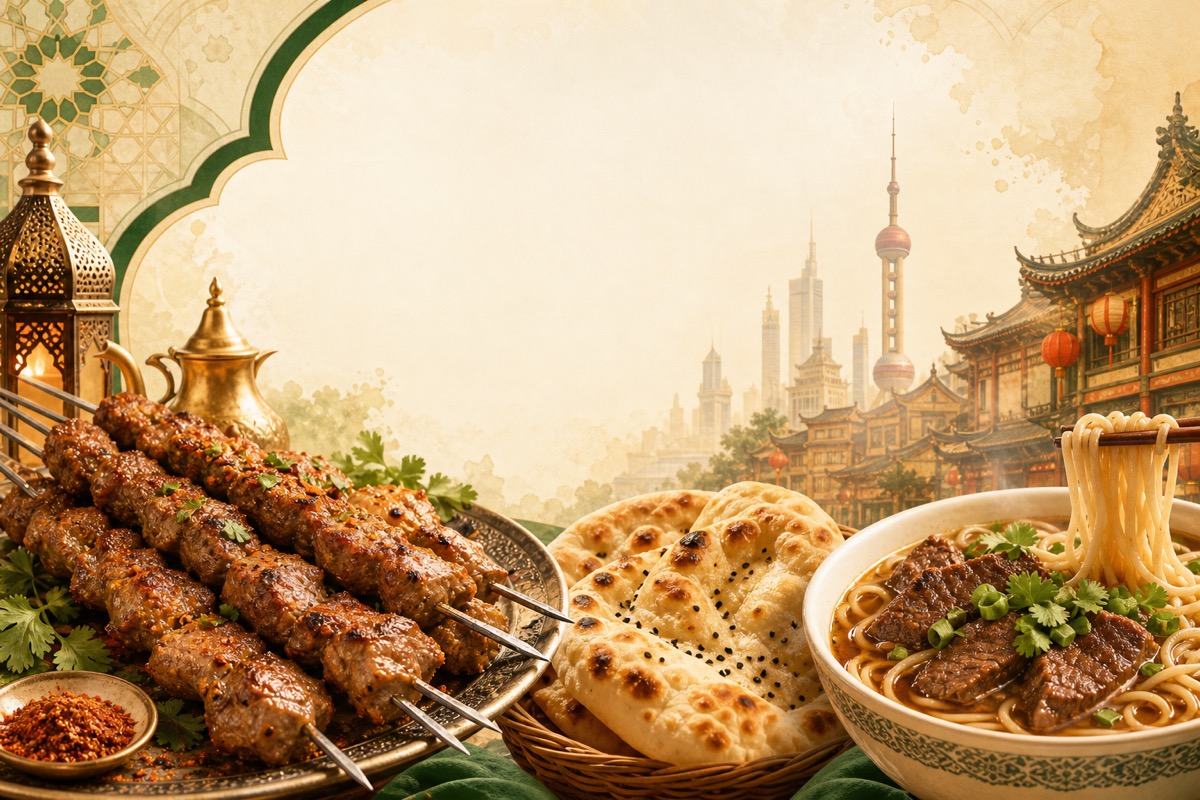
- Uyghur or northwestern grill restaurants — commonly halal with lamb skewers and bread
Signs alone are usually a strong indicator, but busy local patronage and menu specialization are good secondary confirmation.
Best cities and regions for halal food
Halal dining is generally easier in:
- Xi'an
- Lanzhou
- Urumqi and Xinjiang-region cities
- Yinchuan
- Xining
- Beijing and Shanghai, especially in specific districts
- Guangzhou, with strong Muslim food communities
If your itinerary focuses on eastern coastal tourism cities only, halal food still exists but requires more intentional searching.
Dishes travelers often enjoy at halal restaurants
These are widely available and usually straightforward:
- Lamb skewers (yang rou chuan)
- Lanzhou hand-pulled beef noodles
- Big plate chicken
- Beef dumplings or buns
- Naan-style bread
- Cumin lamb stir-fries
- Halal hot pot with beef or lamb broth
These dishes also help travelers avoid the hidden pork problem common in generic Chinese restaurants.
What to watch out for
Even in halal dining, keep these points in mind:
Not every beef noodle shop is halal. Some use the style without halal certification.
Mixed food courts can be risky. A halal sign at one stall does not guarantee separation from non-halal stalls nearby.
Alcohol may still be present in some restaurants. Halal food rules and restaurant beverage policies are not always identical.
Cross-contact varies. Small family restaurants may have tighter practices than large mixed canteens.
If your requirements are strict, choose restaurants that clearly serve Muslim diners every day rather than one-off tourist spots.
How halal food helps with other dietary concerns
Halal restaurants are often a practical solution for travelers avoiding pork, even if they are not Muslim themselves. Because pork is excluded, many common hidden-pork problems disappear.
That said, halal does not automatically solve:
- Shellfish allergies
- Peanut allergies
- Vegetarian or vegan needs
- Alcohol avoidance in all settings
Treat halal as one strong filter, not a guarantee of every personal dietary rule.
Ordering tips in halal restaurants
Halal eateries are often more accustomed to direct questions about meat type, though language barriers still exist.
Helpful habits:
- Point at what other diners are eating if you want a safe recommendation
- Learn a few dish names in advance, such as lamb skewers or beef noodles
- Confirm spice level if you are sensitive to chili
- Carry a note if you have additional allergies beyond halal requirements
Many halal restaurants are casual and fast, which makes ordering by pointing and smiling completely acceptable.
Using halal restaurants as a travel strategy
If you are on a multi-city trip and worried about hidden pork or unclear menus, halal restaurants can become your reliable base category. Build a short list in each city using map apps before you arrive.
That reduces decision fatigue and makes mealtimes less stressful.
Final thoughts
China has a long and living halal food tradition, especially in the northwest and in urban Muslim communities. For many travelers, halal restaurants are the easiest way to enjoy local flavor while avoiding pork-heavy mainstream menus.
If you are visiting during a major holiday or festival, halal restaurants may be busier than usual. Arriving slightly earlier or calling ahead in larger cities can save waiting time and reduce ordering stress when you are hungry after travel.
Pair this guide with hidden pork in Chinese food and useful Chinese dining phrases for a stronger overall plan.