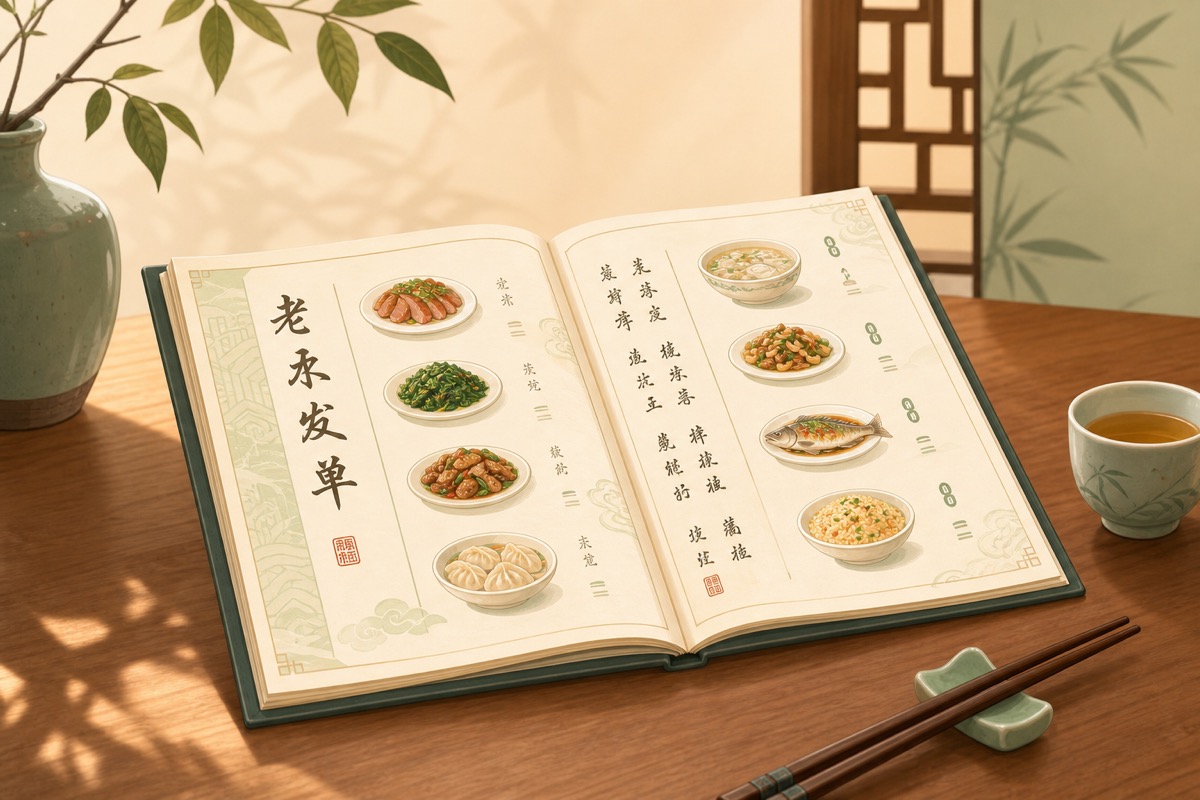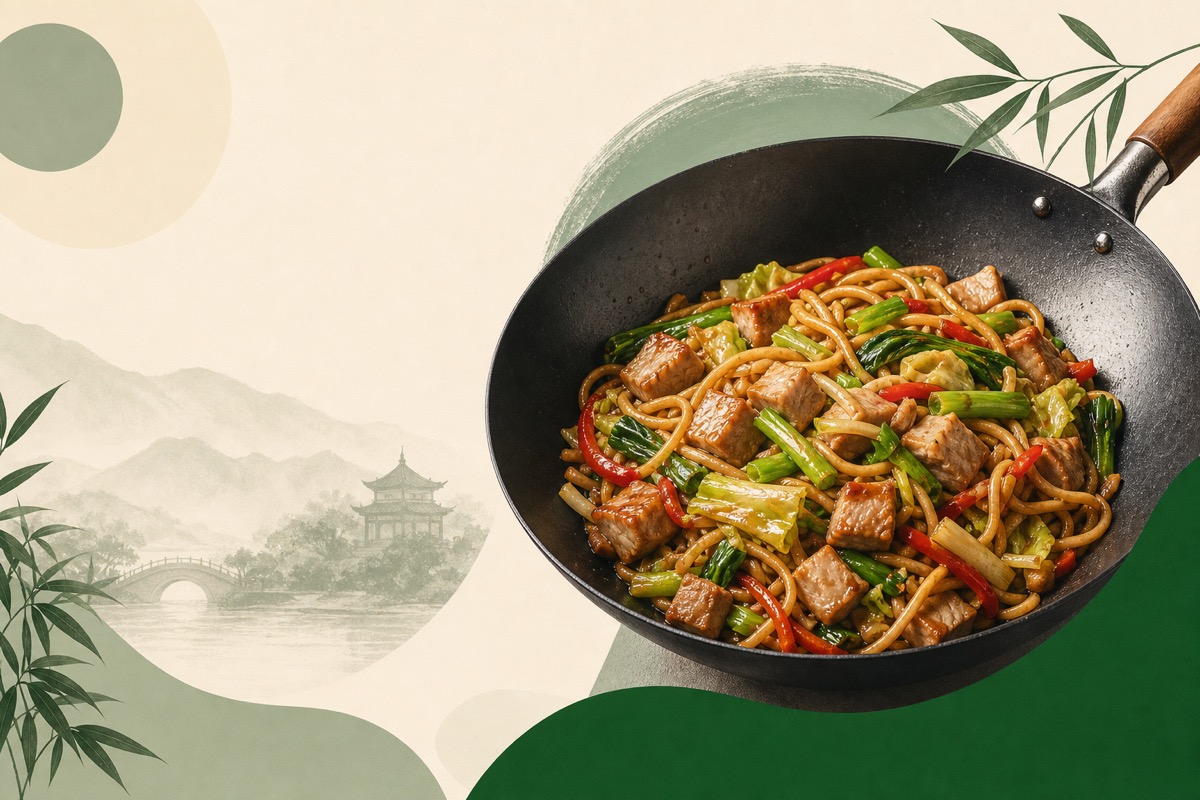
If you are new to China, the menu can feel endless. Hundreds of dishes, regional styles, and names you have never seen before. A good place to start is with the classics—the dishes that appear again and again in restaurants across the country, often with local variations.
Knowing these core dishes helps you order confidently, understand what is on the table, and avoid surprises if you have dietary restrictions.
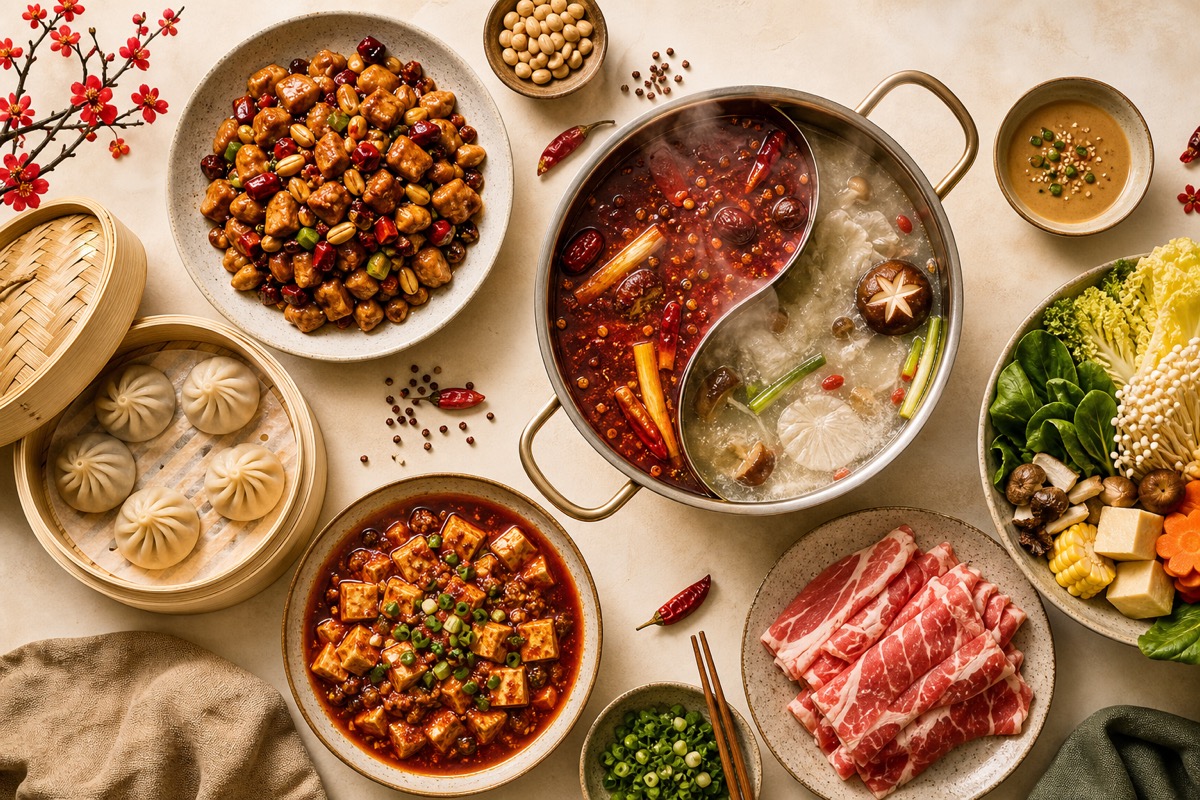
Kung pao chicken
What it is: A stir-fry of diced chicken, dried chilies, peanuts, and a savory-sweet sauce.
Typical ingredients: Chicken, peanut, chili, scallion, garlic, soy-based sauce.
Spice level: Medium to hot, depending on the restaurant.
Contains pork? Usually no, but cross-contact and sauce variations exist.
Vegetarian? Not traditionally, though some restaurants offer a tofu version.
Traveler note: One of the most recognizable Chinese dishes abroad, but quality varies. In Sichuan-style places it may be hotter and more numbing than the mild export version many foreigners know.
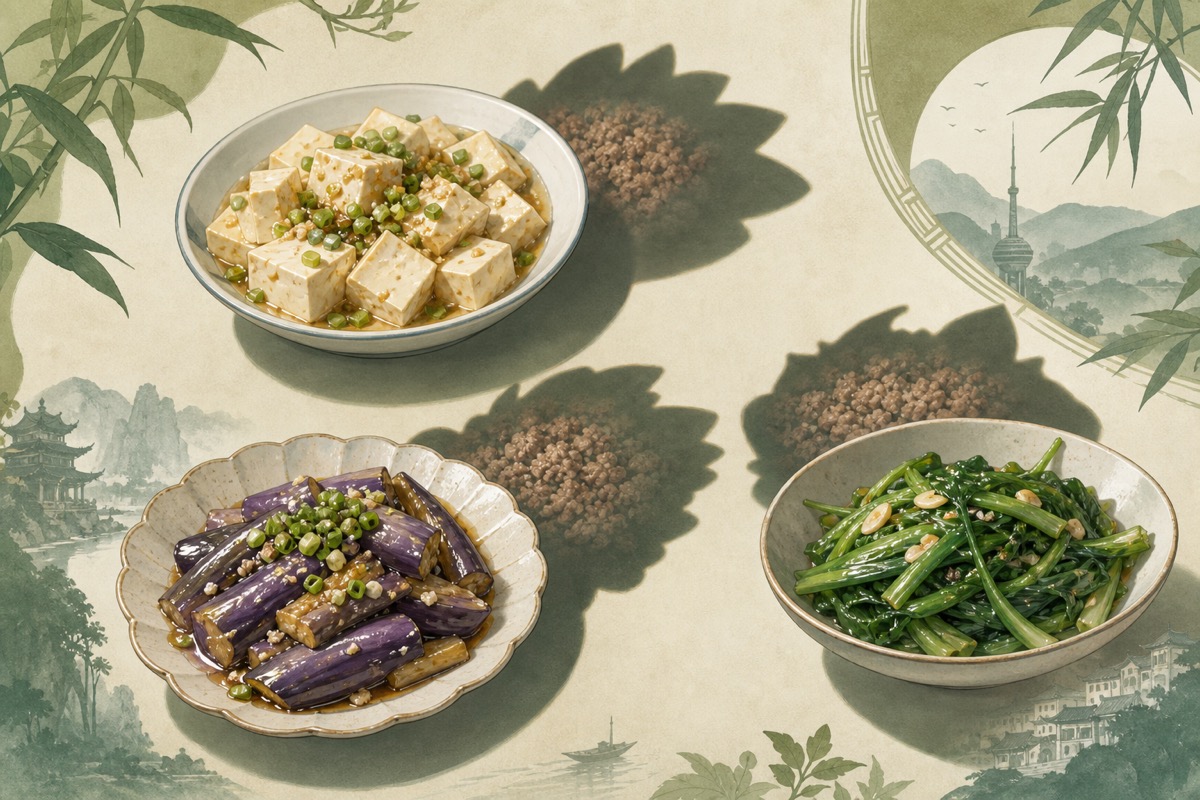
Mapo tofu
What it is: Soft tofu in a spicy, aromatic sauce, often with minced meat and Sichuan peppercorn.
Typical ingredients: Tofu, chili bean paste, minced pork or beef, peppercorn, garlic.
Spice level: Medium to hot.
Contains pork? Often yes in classic versions.
Vegetarian? Sometimes available without meat if requested at flexible restaurants. Buddhist vegetarian places may serve a fully plant-based version.
Traveler note: Do not assume "tofu dish" means meat-free.
Twice-cooked pork (hui guo rou)
What it is: Boiled then stir-fried pork slices with leeks or peppers in a savory chili sauce.
Typical ingredients: Pork belly or shoulder, leek, chili bean paste, soy sauce.
Spice level: Mild to medium.
Contains pork? Yes, by definition.
Vegetarian? No.
Traveler note: A staple in Sichuan cuisine and very different from sweet Western pork dishes.
Fish-fragrant shredded pork (yu xiang rou si)
What it is: Shredded pork with wood ear mushroom and bamboo in a tangy, garlicky sauce. The name refers to a flavor style, not fish.
Typical ingredients: Pork, wood ear, bamboo, pickle, chili, sugar, vinegar.
Spice level: Mild to medium.
Contains pork? Yes.
Vegetarian? No, though eggplant versions exist without pork.
Traveler note: A great example of why literal translation fails on Chinese menus.
Hot pot
What it is: A shared pot of simmering broth in which diners cook raw meat, vegetables, tofu, and noodles at the table.
Typical ingredients: Depends entirely on broth and items ordered.
Spice level: Ranges from mild mushroom broth to intensely spicy Sichuan broth.
Contains pork? Very often, especially in mixed broths and meat platters.
Vegetarian? Possible with plain vegetable broth and plant-based ingredients, but confirm broth and dipping sauces carefully.
Traveler note: Hot pot is social, fun, and highly customizable. It is also one of the easiest meals for mixed dietary groups if you choose broth and ingredients thoughtfully.
Dumplings (jiaozi)
What they are: Wrapped parcels of filling, boiled, steamed, or pan-fried.
Typical ingredients: Pork and chive, pork and cabbage, beef, lamb, shrimp, or vegetable fillings.
Spice level: Usually mild unless served with chili dipping sauce.
Contains pork? Very common, though not universal.
Vegetarian? Yes, vegetable dumplings exist widely.
Traveler note: Dumpling restaurants are excellent for travelers because fillings are easier to identify than complex sauced dishes.
How to use this list when ordering
Instead of trying every dish in one meal, use the classics as reference points.
If you know:
- Kung pao chicken is peanut-heavy and spicy
- Mapo tofu often contains minced pork
- Hot pot depends on broth choice
- Dumplings vary by filling
you already understand a large part of what appears on typical menus.
Which dishes suit different travelers
If you avoid pork: Focus on confirmed chicken, beef, lamb, seafood, or vegetable dishes rather than classic pork specialties.
If you are vegetarian: Look for vegetable dumplings, Buddhist vegetarian restaurants, and explicitly confirmed tofu dishes.
If you dislike spice: Avoid Sichuan classics with heavy chili and peppercorn unless staff can make a mild version.
If you want a social meal: Hot pot and dumpling feasts are hard to beat.
Regional variations matter
These dishes do not taste identical in every province. Mapo tofu in Chengdu may be fierier than in a Shanghai hotel restaurant. Dumplings in the north may be heartier. Hot pot in Chongqing can be dramatically spicier than a mild tourist version.
Treat this guide as a baseline, not a guarantee of exact flavor or ingredients.
How to order these classics with fewer surprises
When trying famous dishes for the first time, use this quick filter:
- If the name includes rou (肉), expect meat.
- If the dish is linked to Sichuan flavor, expect spice and sometimes pork mince.
- If the dish is tofu-based, confirm whether meat is included.
- If the meal is hot pot, choose broth and ingredients deliberately rather than accepting the house default.
These filters will not replace asking staff, but they help you narrow a long menu quickly.
Final thoughts
Learning a handful of classic Chinese dishes makes the whole menu feel less intimidating. You start to see patterns, compare options, and order with context instead of guesswork.
Next, explore how to read Chinese menus and Chinese dishes with hidden meat to go deeper.